The part you never see matters most
Before talking about tile, it’s worth saying this plainly: tile and grout are not waterproof. Water passes through grout and into whatever is behind it. What keeps your walls and floor dry is the waterproofing layer underneath, either a liquid membrane or a sheet system over cement board or foam board, plus a properly sloped shower pan.
Most failed showers we tear out failed behind the tile, not in it. So when you pick a beautiful tile, make sure the same care goes into what sits behind it. A full shower replacement is the right time to get that layer right.
Porcelain, ceramic, stone or glass: the honest comparison
Each tile material has a place. The question is how much maintenance you’re willing to live with in a wet room that sees San Antonio’s mineral-heavy water every day.
- Porcelain: very dense and low-absorption. Holds up to water, stains and wear. Our default for most shower floors and walls.
- Ceramic: lighter and softer than porcelain, fine for walls, less ideal for floors. Often cheaper and easy to cut.
- Natural stone such as marble or travertine: beautiful and unique, but porous. It needs sealing, and acidic cleaners or hard water can etch it.
- Glass tile: bright and reflective, great as an accent. Shows water spots and needs careful installation.
- Zellige and handmade tile: rich texture and variation, but uneven surfaces trap more scale and soap film.
Floor tile: grip, size and slope
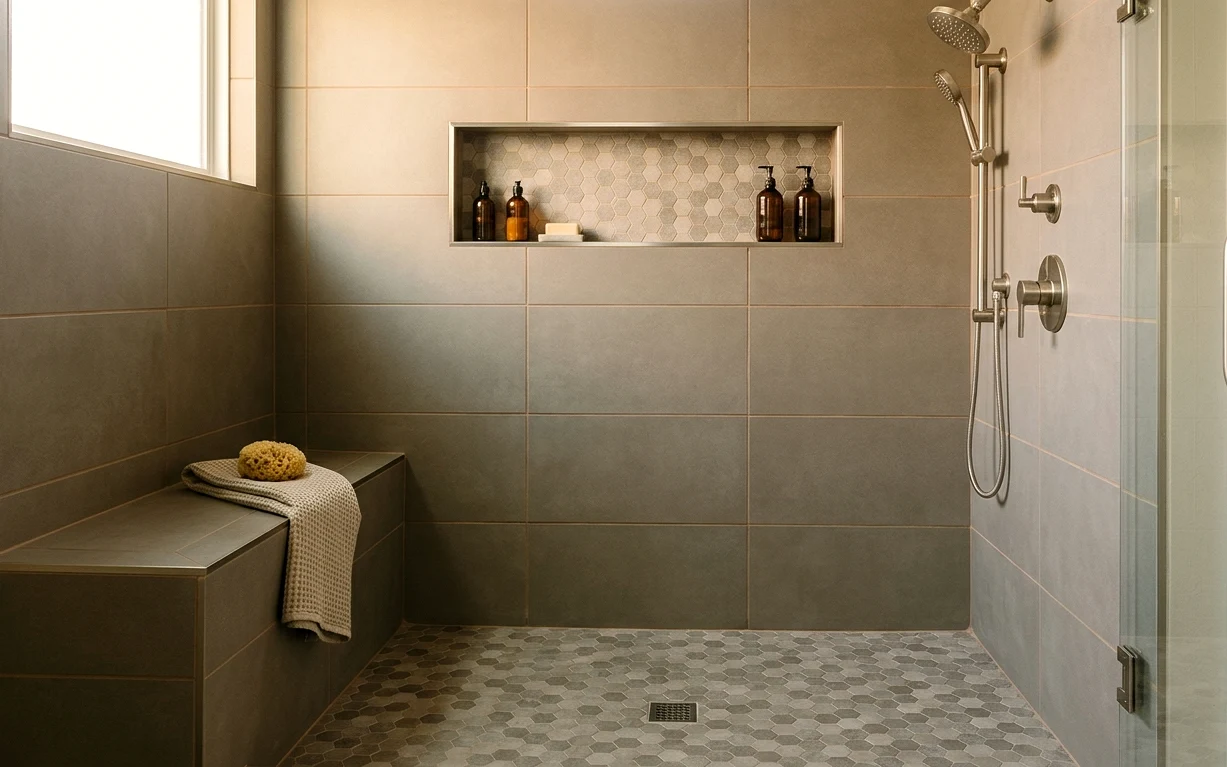
A shower floor has to slope toward the drain, and that slope affects which tile sizes work. With a center drain, the floor slopes in four directions, so small tiles like two-inch squares or hexagons conform to the shape. Large tiles can’t bend to those angles and often leave lippage or puddles.
With a linear drain along one wall, the floor slopes in a single direction. That allows larger tiles, even a single large-format porcelain running into the shower from the main floor. It’s one reason linear drains are popular in curbless designs.
For grip, look for a matte or textured finish, and check the manufacturer’s wet slip rating. More grout lines also add grip, which is another vote for smaller floor tiles.
- Matte or textured surface, never polished, on the floor
- Small tiles or mosaics with a center drain
- Larger tiles only with a linear drain and single slope
- Pebble or river rock floors feel nice but trap soap and scale
Wall tile: size, layout and how far up it goes
Walls give you more freedom. Large-format porcelain, around 12 by 24 inches or bigger, means fewer grout lines and easier cleaning. Classic subway tile is timeless and forgiving. Vertical stacking makes a low ceiling feel taller, which helps in older ranch homes with eight-foot ceilings.
Running tile all the way to the ceiling looks finished and protects the wall from steam. It costs more tile and more labor, but in a shower that gets daily use, it’s usually worth it. Bigger tiles do need flatter walls, so expect extra prep on older homes where walls aren’t perfectly straight.
Tile also has to suit the home around it. In a 1920s bungalow in Alamo Heights or Monte Vista, white hex floors, subway walls and a simple pencil liner feel right at home. A 1990s Stone Oak primary bath often looks best with large warm porcelain and a single textured accent wall. In Hill Country homes in Boerne or Helotes, a limestone-look porcelain ties the shower to the stone outside without the upkeep of real limestone.
Bring a cabinet door sample, a photo of the floor outside the bathroom and the faucet finish you like when you shop. Tile chosen on its own under showroom lights often looks different once it sits beside your vanity in your own light.
Grout choices and color in hard water country
Grout gets more attention than people expect, because it’s where stains, mold and mineral deposits show up first. Plain cement grout needs sealing and will darken over time in a busy shower.
Epoxy and high-performance urethane or single-component grouts resist staining and don’t need sealing, which makes them well suited to San Antonio’s humid summers and hard water. They cost a bit more and take more skill to install. For color, mid-tone grays and warm beiges hide mineral spots and soap film better than bright white or very dark grout.
Tile choices that look great but need more care
Some popular tiles come with tradeoffs. We still install them happily. We just want you to know what living with them looks like before you commit.
- Glossy black or navy tile, which shows every white water spot
- Polished marble, which etches from acidic cleaners and hard water
- Very light grout on the floor, which stains quickly
- Handmade tile with deep texture that traps soap and scale
- Unsealed natural stone, which absorbs water and darkens
Niches, benches and trim details
A recessed niche keeps bottles off the floor and out of sight. Place it on a wall that isn’t facing the bathroom door, and size it to fit the tallest bottle you use. Line it with the same tile or a contrast accent. Slope the bottom of the niche slightly so water drains out.
Benches need the same waterproofing as the rest of the shower. A built-in tiled bench feels solid and adds a place to sit or shave legs. A floating teak or stone bench is a lighter-looking alternative.
Finish the tile edges cleanly. Metal edge profiles in a finish that matches the fixtures, or bullnose trim pieces, keep exposed tile edges from looking rough or chipping.
How to narrow down your shower tile in five steps
Tile showrooms can be overwhelming. Working in this order cuts the choices down quickly.
- Decide on the drain type, since it sets the floor tile size.
- Pick a durable material, usually porcelain, for the floor.
- Choose a wall tile size and layout that suits the room’s height.
- Choose a grout type and color that hides minerals.
- Add one accent, such as a niche, a feature wall or a patterned floor.
More questions on this topic
What shower tile is easiest to clean with San Antonio hard water?
Matte, mid-tone porcelain with large wall tiles and a stain-resistant grout is the easiest to keep clean. Fewer grout lines and a finish that hides spots make daily squeegeeing quick. Our guide on hard water and fixtures covers glass and faucets as well.
Is marble a bad idea for a shower floor?
It’s not a bad idea, but it’s higher maintenance. Marble is porous and soft compared with porcelain. It needs regular sealing, can etch from acidic cleaners and hard water, and polished marble gets slippery. Honed marble mosaics are a better choice if you love the look.
How much does shower tile installation usually cost in San Antonio?
Installed shower tile typically runs about $24 to $48 per square foot for porcelain, including setting materials and labor, and more for natural stone, mosaics or complex patterns. Waterproofing, pan work and demolition are usually priced separately. These figures are for planning, not a quote.
Services this guide covers
Bathroom Tile Installation
Good tile work is mostly preparation. Flat walls, a proper waterproof layer, and movement joints where the slab will shift decide whether a bathroom floor or shower stays crack free. We spend our time there, then set the tile carefully.
Walk-In Shower Installation
A walk-in shower looks simple: tile, a drain and a sheet of glass. The part that decides whether it lasts is underneath, in the slope, the pan and the membrane, and that’s where we spend the most care.
Shower Pan Replacement
Wet baseboards outside the shower, loose floor tile, a musty smell, or a dark stain on the ceiling below usually trace back to one thing: a shower pan that has stopped holding water. Calls are answered 24/7, so you can reach us the moment you spot it.
Keep reading
How Long a Kitchen Remodel Takes, From First Call to Final Wipe-Down
The construction part of a kitchen remodel is shorter than most people think. The planning and ordering part is longer. Here is what happens in each phase and what tends to slow it down.
Planning an Outdoor Kitchen That Survives a San Antonio Summer
A grill on a patio is easy. An outdoor kitchen you’ll actually use in August takes planning for sun, heat, storms and hard water. Here are the decisions that matter, in the order we make them.
Kitchen Remodel Cost in San Antonio: Ranges by Scope
Planning ranges for San Antonio kitchens, sorted by how much of the room actually changes, with the handful of decisions that push a budget up or hold it steady.