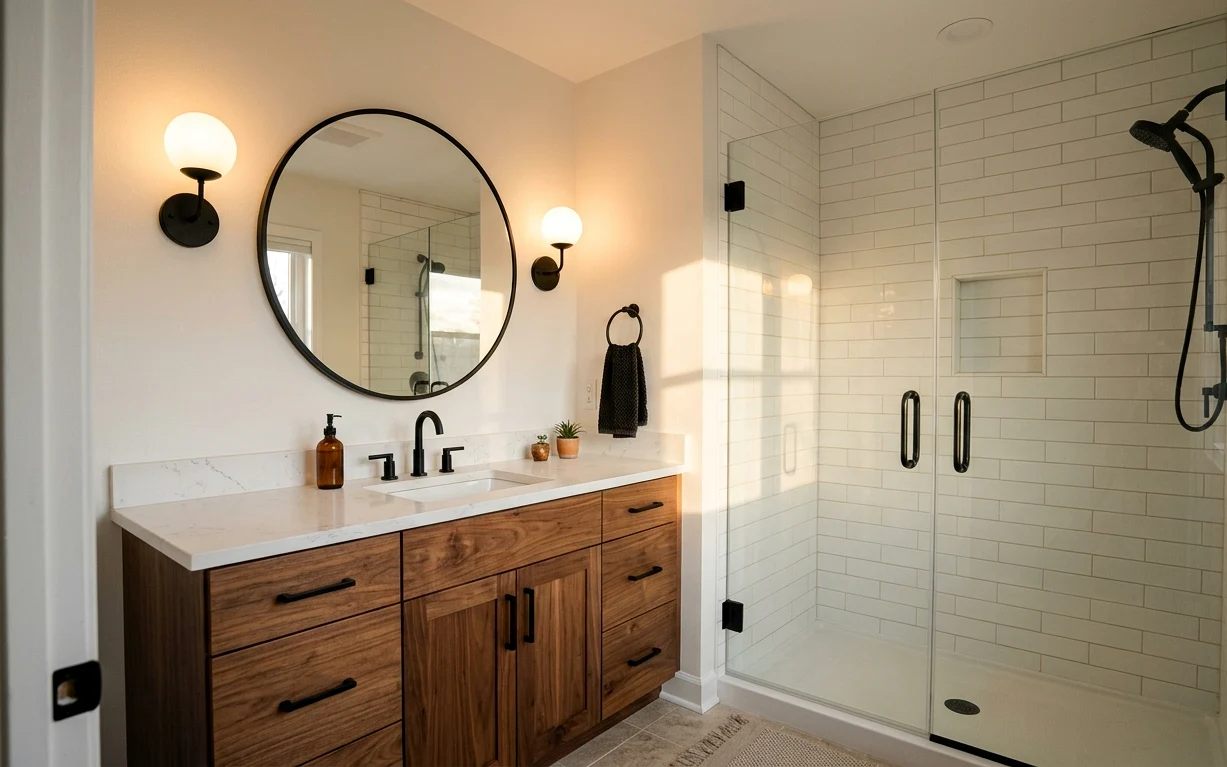
What a Full Bathroom Remodel Actually Includes
When we say full remodel, we mean taking the room down to the studs and subfloor where it makes sense, then rebuilding it with new plumbing valves, waterproofing, tile, a vanity, a toilet, lighting, ventilation and paint. That’s different from a cosmetic refresh, which keeps the shower and floor and swaps the visible pieces. Both have their place, and the walkthrough is where we figure out which one your bathroom needs.
The clue is usually what’s behind the walls. Soft drywall near the tub, loose tile, a sagging floor near the toilet or a musty smell that won’t clear out all point to water damage that a refresh would only cover up. In those cases, the full remodel is the cheaper path in the long run, because you pay to fix the problem once.
- Demolition to studs and subfloor in wet areas
- New shower or tub valve and supply lines
- Drain checks and repairs, including slab drains where needed
- Continuous waterproofing membrane in the shower
- Tile for floors, walls and shower
- Vanity, counter, sink, faucet and mirror
- Toilet, accessories, lighting and an exhaust fan ducted outside
Is the Builder Bath in Your 1970s or 1980s Home Holding Up?
Many of the bathrooms we remodel around San Antonio were built in the 1970s and 1980s, from the ranch homes in Windcrest and Castle Hills to early tract homes in Live Oak, Converse and Universal City. They share a few traits: a fiberglass or tiled tub surround, a single vanity on a short cabinet, one light bar above a flat mirror and an exhaust fan that vents into the attic or doesn’t exist at all.
Those baths have now seen forty-plus years of hard water and humid summers. We often find corroded shut-off valves, tub drains worn thin, cast-iron or early plastic drain lines that need attention, and drywall behind the tub that’s been wet more than once. Planning the remodel with those likely issues in mind keeps surprises small.
Newer homes from the 1990s and 2000s in Stone Oak, Alamo Ranch or Schertz tend to have larger primary baths with garden tubs nobody uses and small showers. Those remodels are often about trading the tub’s space for a bigger shower, which our tub-to-shower conversion page covers in detail.
Slab Drains and Layout Changes: Where the Budget Goes
Most San Antonio houses sit on slab-on-grade foundations, and that shapes every layout decision in a bathroom. Toilet, shower and tub drains all run through the concrete. Keeping fixtures in place keeps costs predictable. Moving a toilet a few feet or relocating a shower drain means saw-cutting the slab, trenching, setting new pipe at the right slope, getting an inspection and patching the concrete.
Expansive clay soils add another wrinkle. As the ground swells and shrinks with the seasons, slabs move, and that movement can crack tile and stress drain joints. We look for signs of foundation movement during the walkthrough, and we use crack-isolation membranes under tile in rooms that show any history of cracking. The slab foundation guide explains what moving a drain involves.
Layout changes can still be worth it. Sometimes moving a toilet out from between the vanity and the tub is what makes a room feel twice as large. We price both options so you can weigh the extra cost against what the change gives you.
Waterproofing, Ventilation and Hard Water: The Unseen Work
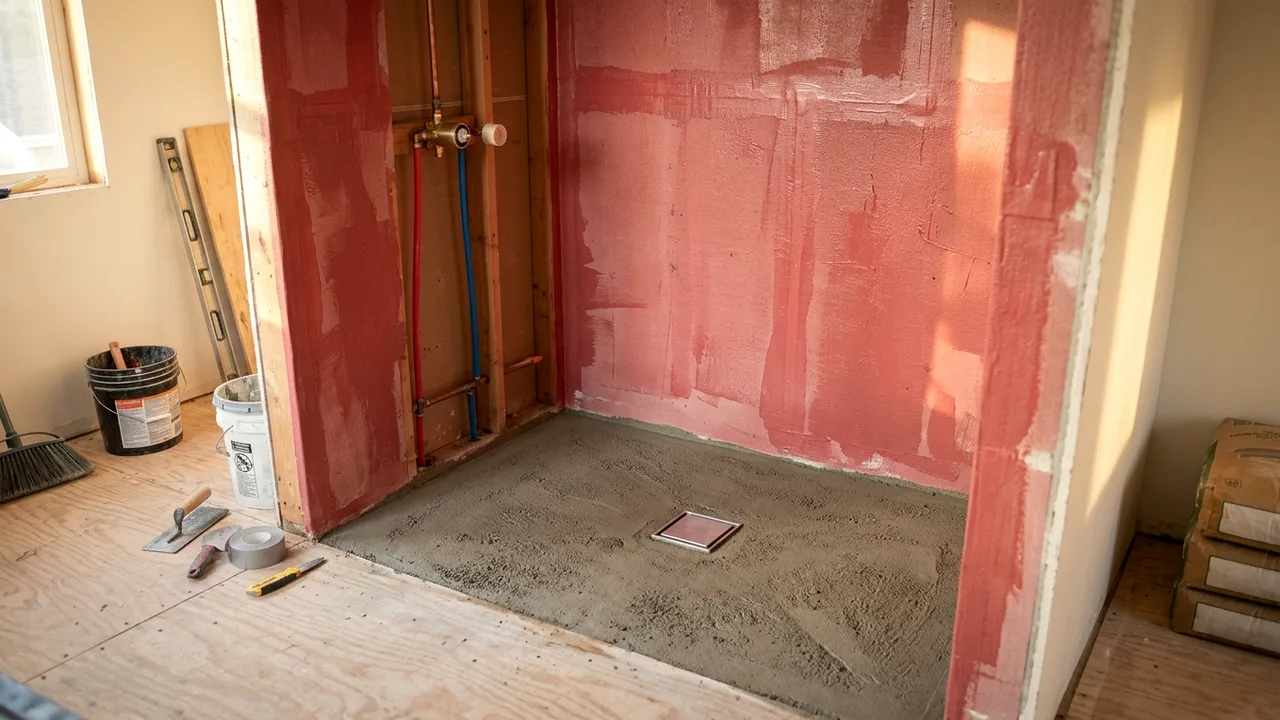
In the shower, tile and grout are not waterproof. They shed most water, but some always gets through. What keeps the walls dry is the membrane behind the tile, whether that’s a liquid-applied coating or a sheet system tied into a properly sloped pan. We flood test shower pans before tile goes on, so a leak shows up while it’s still easy to fix.
Ventilation is just as important in San Antonio’s climate. Long, humid summers mean bathroom moisture doesn’t dry out on its own. A properly sized exhaust fan, ducted to the outside and run long enough after a shower, prevents mold on grout lines and ceilings. Many older fans vent into the attic, which moves the moisture problem rather than solving it.
Hard water is the third piece. SAWS water carries enough minerals to scale glass doors, clog showerheads and wear out faucet cartridges early. We recommend fixtures with replaceable cartridges, easy-clean glass coatings and finishes that hide spots. If you don’t have a water softener, the bathroom remodel is a good time to think about one.
- Tile and grout alone do not waterproof a shower
- Exhaust fans vented into the attic can lead to mold and rot
- Clear glass shows hard water spots quickly without a protective coating
- Cheap valves without replaceable cartridges are hard to repair later
- Skipping a flood test risks a hidden leak under new tile
Choosing Finishes That Suit How You Use the Room
Finishes should follow function. A family bath used by kids needs a durable floor tile with good slip resistance, a quartz or solid-surface vanity top and a tub for bathing little ones. A primary bath used by two adults might prioritize a larger shower, a double vanity and better lighting at the mirror. A guest bath can take more decorative tile, since it sees far less wear.
Porcelain tile is our usual recommendation for floors and walls because it’s dense, absorbs little water and holds up to cleaning. Larger tiles mean fewer grout lines, but shower floors need smaller tiles so they can follow the slope to the drain. Grout choice matters too: a sealed cement grout or a stain-resistant epoxy grout keeps cleaning simple.
Lighting is often overlooked. A light on each side of the mirror gives even light on the face, while a fixture above the mirror alone casts shadows. Add a dimmable overhead light and a night light in the toe kick, and the room works at every hour.
How a Bathroom Remodel Moves From Demo to Done
Every remodel has its own wrinkles, but the order of work rarely changes.
- Walkthrough and design: we measure, check for water damage and slab movement, and talk through how the room is used.
- Selections and ordering: tile, fixtures, vanity and glass are chosen and ordered before demolition.
- Permits: plumbing and electrical permits are filed with the city or your suburb as needed.
- Demolition: old finishes come out, and any hidden damage is shown to you before repairs.
- Rough-in: drains, supply lines, valves, wiring and the exhaust fan duct are installed and inspected.
- Waterproofing and tile: membranes go on, pans are flood tested, then tile and grout are set.
- Finish install: vanity, counter, toilet, fixtures, lighting, mirrors and glass are installed.
- Final walkthrough: we test everything with you and leave care notes for grout, glass and fixtures.
Permits, Historic Homes and Living Through the Work
Plumbing and electrical changes in a bathroom generally need permits through the City of San Antonio Development Services Department, or your suburb’s building office. Interior bathroom work in historic districts such as King William or Monte Vista usually doesn’t need historic review, but a new window or exterior vent on a street-facing wall might. We check before design is finalized.
If you only have one bathroom, plan for a few weeks without it. Some families stay with relatives or book short stays during the plumbing and tile stages. When there’s a second bath in the house, we keep dust and noise contained with plastic barriers and floor protection so daily life keeps going. When you’re ready to talk through your bathroom, call for a walkthrough.
Projects that often go with bathroom remodeling
Master Bathroom Remodel
A master bath has to handle two people getting ready at once, plus the slow evenings when one of you wants a long soak. We design these rooms for both, with room to move and storage where it’s needed.
Walk-In Shower Installation
A walk-in shower looks simple: tile, a drain and a sheet of glass. The part that decides whether it lasts is underneath, in the slope, the pan and the membrane, and that’s where we spend the most care.
Bathroom Tile Installation
Good tile work is mostly preparation. Flat walls, a proper waterproof layer, and movement joints where the slab will shift decide whether a bathroom floor or shower stays crack free. We spend our time there, then set the tile carefully.
Bathroom Vanity Installation
A new vanity changes how a bathroom works every morning: more drawer space, a second sink, a top that doesn’t stain. We handle the cabinet, the countertop, the plumbing, and the floor and wall gaps the old one leaves behind.
Bathroom Remodeling questions
How long does a full bathroom remodel take in San Antonio?
Most full bathroom remodels take 3 to 6 weeks of on-site work once materials are in hand. Inspections, tile complexity and custom glass, which is measured after tile is set, decide where in that range you land. Ordering everything before demolition keeps the bathroom out of service for the shortest time.
What’s the most common hidden problem in San Antonio bathroom remodels?
Water damage behind tub and shower walls is the most frequent find, especially in 1970s and 1980s builder baths. Rotted framing, moldy drywall and corroded valves show up often. Worn drain lines in the slab are another. We show you anything we uncover and explain repair options before we move ahead.
Should I add a water softener during my San Antonio bathroom remodel?
It’s worth considering. San Antonio’s hard water scales glass, clogs showerheads and shortens the life of faucet cartridges. A whole-house softener protects every fixture you’re paying for. If you’d rather not add one, choose coated glass and fixtures with replaceable cartridges, and wipe the glass after showers.
Can I keep my bathtub and only remodel the rest of the bathroom?
Yes, if the tub is in good shape and the walls around it are dry and solid. We can protect the tub during demolition and retile the surround, or reglaze it if the finish is worn. If there are signs of leaks behind the tub, though, it’s usually wiser to replace it while the walls are open.
Does a bathroom remodel in San Antonio need a permit?
Usually yes when plumbing, electrical or structural work is involved, which covers most full remodels. The City of San Antonio Development Services Department handles permits inside city limits, and suburbs have their own offices. Cosmetic changes like paint or a vanity swap generally don’t. We file the permits and schedule inspections.