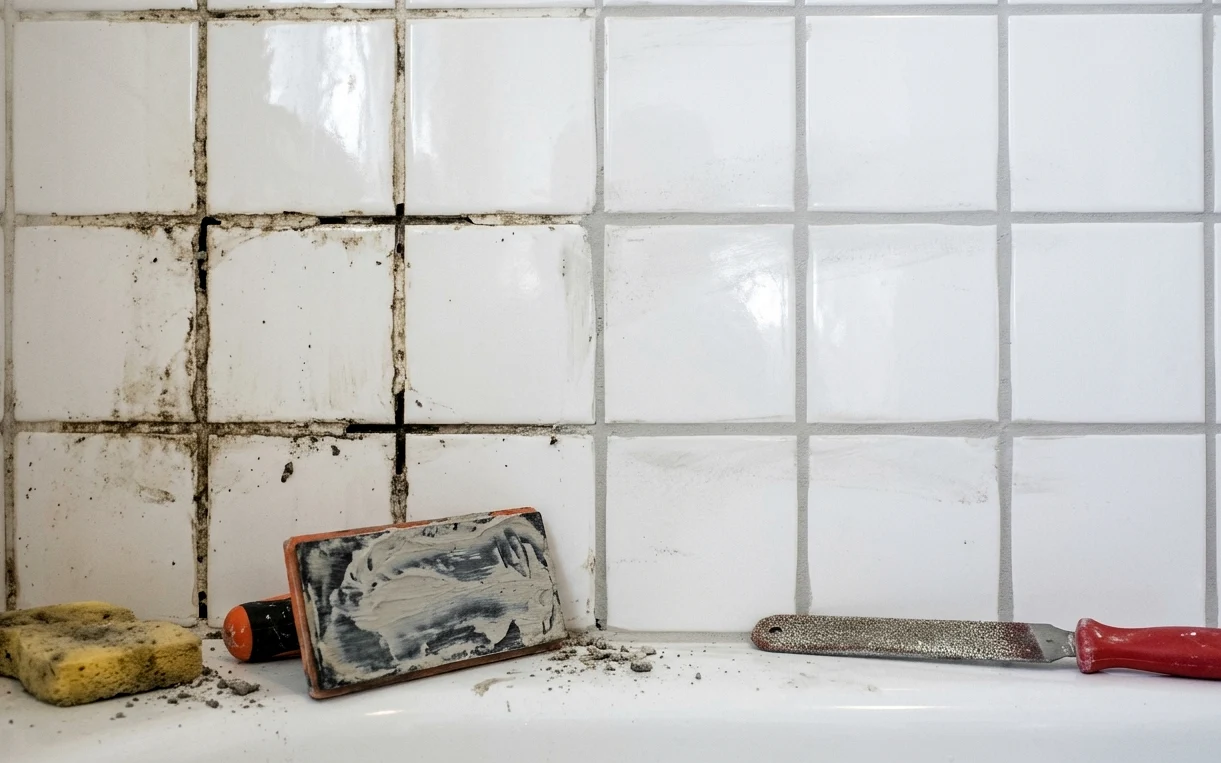
What Failing Grout and Caulk Are Telling You
Grout is a filler, not a waterproof barrier. Its job is to lock tiles in place and shed most of the water. When it starts to crack, wash out or turn dark in the corners, water is reaching the setting bed more often than it should. Caught early, that’s a surface repair. Left for years, it becomes a wall or pan repair.
Caulk is a different material that belongs at every change of plane: inside corners, where tile meets the tub, and around the valve and spout. Many showers we see have grout packed into those corners instead, and it cracks every time the house shifts slightly.
- Grout lines that are sandy, recessed or missing in spots
- Dark staining that comes back right after cleaning, often a sign of trapped moisture
- Cracked grout running in a straight line across several tiles
- Peeling or moldy caulk at the tub ledge, corners or around fixtures
- Tiles that sound hollow when tapped or move under hand pressure
Clay Soil, Slab Movement and the Crack Patterns We Look For
Much of San Antonio sits on expansive clay that swells after rain and shrinks in drought. Slab homes move with it, and tile is rigid, so it shows that movement first. The pattern of cracking tells us a lot about the cause.
A crack that runs through grout and tile in a long straight or stair-stepped line across a floor usually follows a slab crack below. Replacing those tiles without an isolation membrane just brings the crack back. Scattered cracked tiles with hollow spots point to poor thinset coverage when the tile was set. Hairline cracks only in grout at wall corners are usually normal seasonal movement and get fixed with flexible caulk, not more grout.
If floor cracks are widening quickly or doors around the house have started sticking, a foundation check comes before tile repair. Our guide on slab foundations and bathroom work explains what to watch for.
When Regrouting Won’t Save the Shower
Grout repair is a good fix for a shower that is still dry behind the tile. It can’t fix a failed liner, rotted backer board or a pan that’s been leaking into the slab. Putting new grout over those problems looks fine for a few months, then the stains and smell come back.
We check before we quote the work: probing grout joints, tapping tiles, reading moisture at the base of the walls, and looking for water marks on the other side of the wall or in the next room. When the signs point below the tile, we’ll tell you that a shower pan replacement is the real repair, or that the leak needs tracing and repair first.
- Moisture readings stay high at the base of the walls a day after the last shower
- Floor tiles in the shower move, or grout keeps cracking in the same spots
- Water stains or swelling on baseboards, closet walls or flooring outside the shower
- A musty smell that cleaning doesn’t remove
- Wall tile sits over drywall that crumbles when a grout joint is opened
How a Regrout and Tile Repair Job Goes
The work is slow and dusty if done right, because the old grout has to come out to a real depth before new grout can bond. A thin skim over old grout pops loose quickly.
- Inspect, take moisture readings and confirm the shower is a surface repair
- Cut out old grout to about two-thirds of the joint depth and remove all caulk
- Pull and replace cracked or hollow tiles, back-buttering new tiles for full coverage
- Vacuum and clean the joints, then let any damp areas dry
- Pack new grout, cementitious or epoxy, and tool joints to match the originals
- Run mold-resistant silicone at corners, the tub or pan edge and around fixtures
- Seal cement grout after it cures and walk you through the waiting time before showers
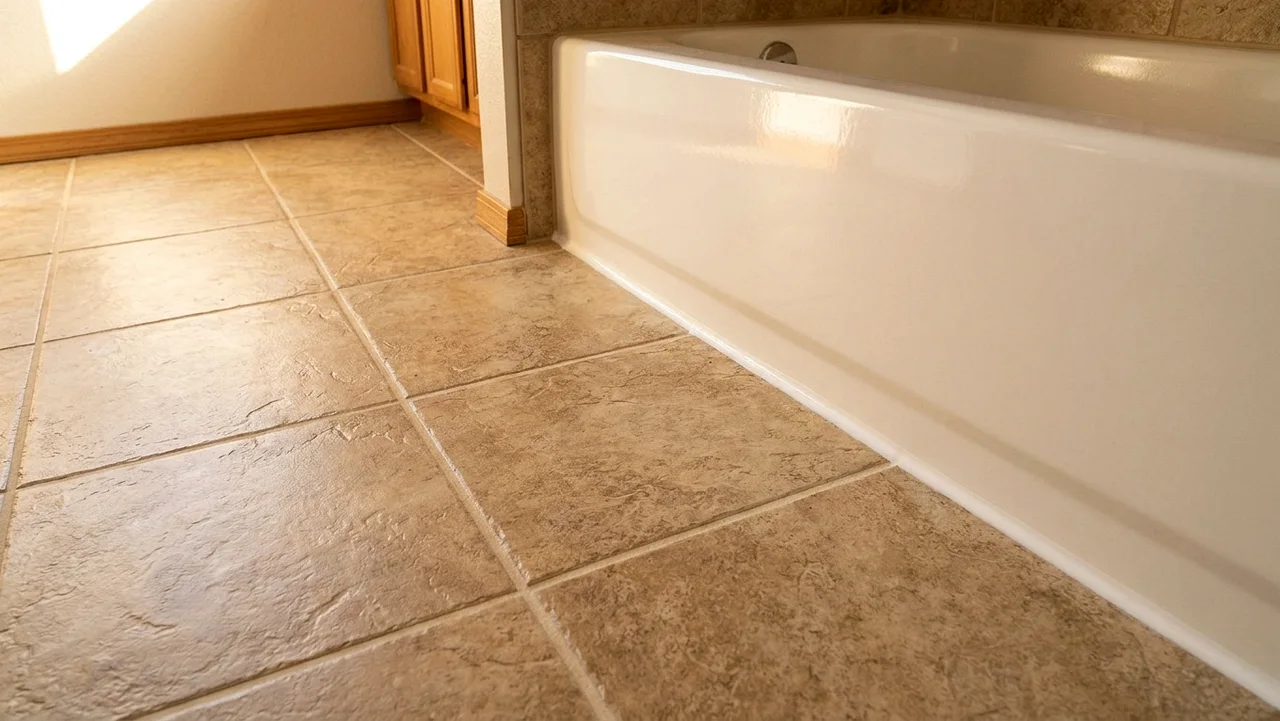
Matching Old Tile and Picking the Right Grout
Replacing a few tiles is easy when you have leftovers in the garage. Many San Antonio homes don’t, especially 1950s and 1960s ranch baths with tile colors that went out of production long ago. We look for close matches from salvage and specialty suppliers, and when there isn’t one, we suggest a deliberate accent band or border in place of the damaged row.
For grout, a modern cement grout with polymer additives is fine for most walls when it’s sealed. Epoxy and urethane grouts cost more but resist staining and mildew far better, which helps on shower floors in humid summers. Color matters too: a mid-tone gray or beige hides mineral haze better than bright white.
Keeping New Grout Clean Under Hard Water
Mineral-heavy water leaves a whitish film on grout, and harsh acid cleaners eat into cement grout over time. Use a pH-neutral tile cleaner for routine cleaning, squeegee walls after showers, and run the fan for 20 minutes or so.
Reseal cement grout every year or two, more often on the shower floor. Epoxy grout doesn’t need sealing. If it’s time, give us a ring and we’ll check the shower and tell you plainly whether grout work will hold.
Projects that often go with regrouting and tile repair
Shower Pan Replacement
Wet baseboards outside the shower, loose floor tile, a musty smell, or a dark stain on the ceiling below usually trace back to one thing: a shower pan that has stopped holding water. Calls are answered 24/7, so you can reach us the moment you spot it.
Leaking Shower Repair
A shower leak rarely shows up where it starts. Water runs along studs, under tile, and across the slab before it stains a baseboard or a ceiling, so the first job is finding the true source before anything gets torn out.
Bathroom Tile Installation
Good tile work is mostly preparation. Flat walls, a proper waterproof layer, and movement joints where the slab will shift decide whether a bathroom floor or shower stays crack free. We spend our time there, then set the tile carefully.
Shower Door Installation
Not every bathroom needs heavy frameless glass. A well-chosen framed, semi-frameless, sliding or pivot door can replace a moldy curtain or a sagging old slider for a fraction of the cost, and it often seals better.
Regrouting and Tile Repair questions
How long does regrouting a shower take before I can use it in San Antonio?
Most showers are regrouted in one or two days. Cement grout typically needs about 72 hours before regular showers, and sealing comes after it cures. Epoxy grout can often be used sooner. Humid weather slows curing a bit, so we give you the timing for the specific grout we use.
Can you regrout over old grout instead of removing it?
We don’t recommend it. A thin layer over old grout has little to bond to and tends to crack or flake within months. Removing the old grout to most of the joint depth gives the new grout enough room and a clean surface to lock into, which is what makes the repair last.
Why does tile keep cracking in the same line across my San Antonio bathroom floor?
A repeating straight or stepped crack usually follows a crack in the slab underneath, caused by clay soil movement. New tile set directly over it will crack again. Installing an isolation membrane over the slab crack before new tile goes down lets the slab move a little without breaking the tile.
Is epoxy grout worth the extra cost for a shower tile repair?
On shower floors and in households that hate scrubbing, often yes. Epoxy resists stains, mildew and hard water haze better than cement grout and doesn’t need sealing. It’s harder to install and costs more per joint foot, so on dry walls a sealed polymer cement grout is usually enough.
Can you replace one cracked tile in a shower without damaging the tiles around it?
Usually. We cut the grout around the cracked tile first so it releases without stressing its neighbors, then break it out from the center. The setting bed is cleaned, the new tile is back-buttered and set, and the joints are regrouted to match. Finding a matching tile is often the harder part.