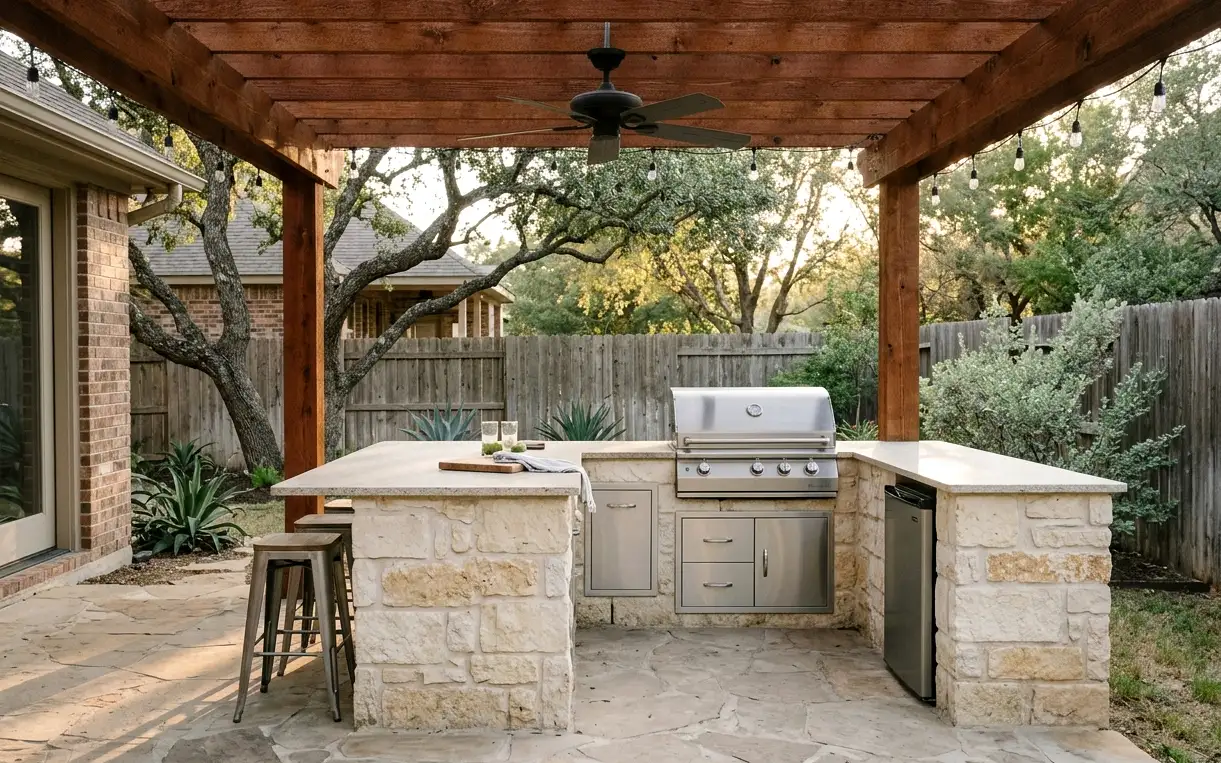
Shade Comes Before the Grill
The most common outdoor kitchen mistake we see around San Antonio is a beautiful island set in full sun. From June through September, a stone counter facing west can get too hot to touch by late afternoon, and the cook stands in it while everyone else sits under the patio cover. So the first question we ask isn’t which grill you want. It’s where the shade falls at 6 p.m. in August.
Often the right answer is to tuck the kitchen under an existing patio roof, or extend that roof a few feet. When the kitchen sits out in the yard, we design a pergola with a solid or louvered top, or a freestanding pavilion. A ceiling fan rated for damp locations makes an outdoor kitchen usable on muggy evenings, and it’s far easier to wire in during construction than afterward.
A grill under a roof needs clearance and ventilation. We follow the grill maker’s clearance rules for combustibles and add an outdoor-rated vent hood when the cooking zone sits under a ceiling, so smoke and heat don’t stain the underside of the cover.
Which Base and Counter Materials Hold Up Outdoors Here?
Wood framing has no place inside an outdoor kitchen base here. Between humidity, termites and the occasional sprinkler overspray, it rots and invites pests. We build bases from concrete block or galvanized steel studs with cement board, then finish them in stone veneer, stucco or a mix of both. Limestone veneer pairs naturally with Hill Country homes in Helotes, Boerne and Bulverde. Smooth stucco suits stucco or modern homes and costs less.
Counters have to take direct sun, heat and grease. Granite is the standby, and a light, honed or leathered granite stays cooler than a dark polished one. Many quartz products aren’t rated for outdoor use, because UV light can fade and yellow the resin, so we don’t put standard indoor quartz in the sun. Our article on quartz versus granite in Texas heat covers that in detail. Sealed concrete and porcelain slabs are other options we use.
- Concrete block or steel stud bases, never wood framing
- Stone veneer or stucco finish set over cement board or block
- Granite, porcelain slab or sealed concrete counters rated for sun
- Marine-grade polymer or stainless doors and drawers
- Light-colored surfaces where the sun hits hardest
- Counters sealed after install and resealed on a regular schedule
Running Gas, Power and Water Out to the Patio
Utilities decide much of the cost and nearly all of the safety. A natural gas grill needs a line sized for every appliance it will feed, run from the meter or an existing branch, with a shutoff valve you can reach. That line usually travels underground in a trench, and it gets pressure tested before it’s buried. A propane setup avoids the trench but means swapping tanks and finding a ventilated spot for them inside the island.
Electrical work covers outdoor GFCI outlets, a circuit for a refrigerator, lighting and any fan or hood. Wire runs in buried conduit or through the patio structure, with weather-resistant boxes and covers. A sink needs a water supply and a place for the water to go, which may mean tying into the house drain or a code-compliant alternative. In most cases this work needs permits and inspections through the city or your suburb’s building office, and we schedule those as part of the job.
- Undersized gas lines starve a grill and side burner running together
- Indoor-rated outlets and fixtures corrode quickly in humid air
- Propane tanks sealed inside a base with no vents are a hazard
- A sink with no proper drain route turns into a mosquito problem
- Trenching across a finished lawn or patio adds cost if it’s planned too late
How Your Outdoor Kitchen Gets Built
Outdoor jobs depend on the weather, so we build some flexibility into the schedule and protect open trenches and fresh masonry when storms roll in.
- Site visit: we study sun and shade, measure from the house, find the gas meter and electrical panel and check drainage.
- Design: island shape, appliance cutouts, shade structure and utility routes are drawn and priced.
- Permits and ordering: permits are filed and the grill, refrigerator and doors are ordered to lock in cutout sizes.
- Footing and trenching: a pad or footing is poured if needed, and trenches are dug for gas, conduit and water.
- Base construction: block or steel framing goes up, utilities are roughed in and inspected.
- Finish work: veneer or stucco is applied, counters are set and sealed, and doors are installed.
- Hookup and test: appliances are connected, gas is leak tested, outlets and lights are checked and we walk you through care.
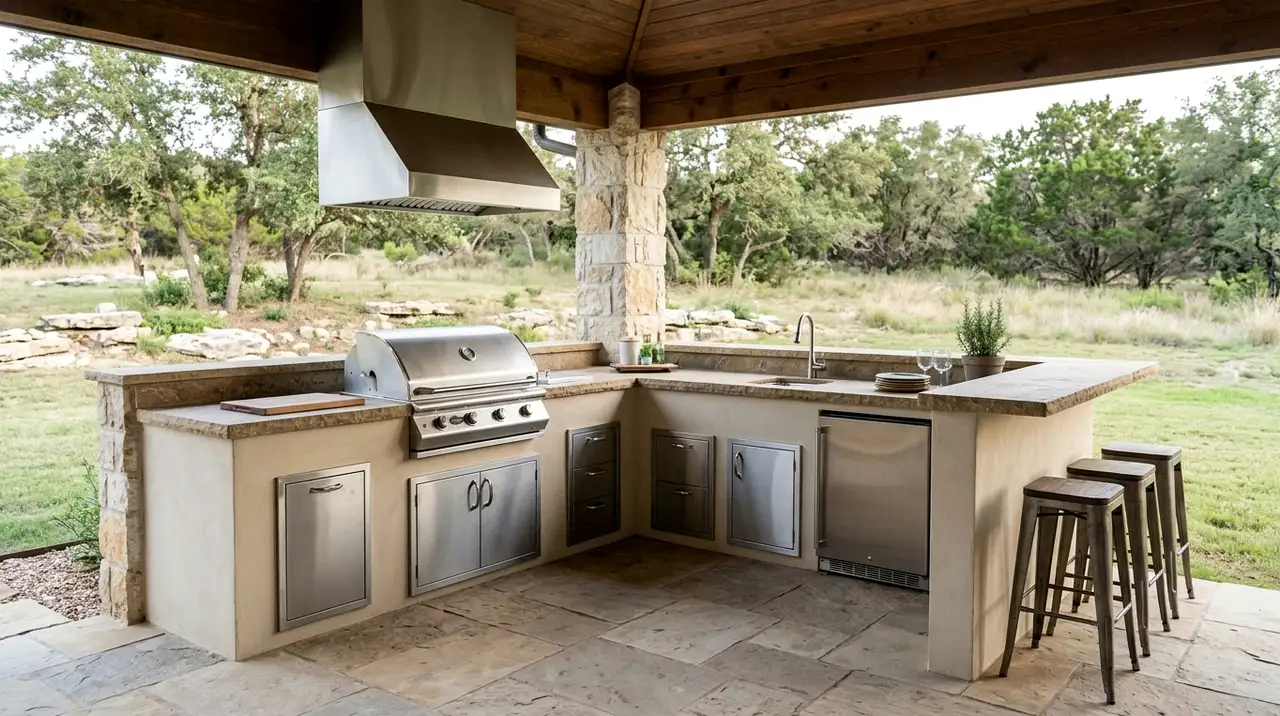
Appliances That Earn Their Place Outside
A built-in grill is the anchor, and stainless steel grade matters. Lower grades of stainless can show rust spots in humid air, so we steer people toward 304-grade bodies and doors. A side burner is handy for boiling corn or frying, and a vent hood keeps smoke off the patio ceiling.
Refrigerators must be rated for outdoor use. An indoor beverage fridge set under a hot counter will run constantly and fail early. A small sink saves trips indoors, and a trash pull-out keeps critters out of open bags. If you’d like the outdoor setup to match the indoor kitchen, we can plan both together as part of a full kitchen remodel, so finishes and appliance brands line up.
Keeping It Looking New After a Few Summers
Outdoor kitchens need light, regular care. Reseal granite or concrete counters about once a year, or sooner if water stops beading. Wipe stainless with a cleaner made for it and cover the grill when it’s not in use. Before the first freeze of winter, shut off and drain the sink supply so the lines don’t split.
Our outdoor kitchen guide for South Texas heat goes deeper on materials and upkeep. It’s worth reading before you settle on finishes.
Projects that often go with outdoor kitchen construction
Kitchen Remodeling
A good kitchen remodel starts with the house, not a catalog photo. We design and build full kitchen remodels across San Antonio, sorting out layout, plumbing, power and permits before anyone picks a cabinet color.
Granite Countertops
Granite is natural stone, which means no two slabs match and the one you choose is the one you get. We help you pick slabs in person, lay out the cuts, and install a counter that stands up to hot pans and heavy use.
Kitchen Appliance Installation
A new appliance is only as good as the opening, circuit and connection behind it. We handle the cabinet changes, wiring, gas and ductwork that turn a delivery into a working kitchen.
Kitchen Lighting Installation
Plenty of kitchens have one bright fixture in the middle of the ceiling and a shadow over every counter. We plan lighting in layers so you can see what you’re chopping, set a mood at night and stop squinting at the stove.
Outdoor Kitchen Construction questions
Do I need a permit for an outdoor kitchen in San Antonio?
Usually yes when the project includes a gas line, new electrical circuits, plumbing or a roofed structure. The City of San Antonio Development Services Department handles those inside city limits, and suburbs have their own offices. HOAs in many master-planned neighborhoods want to review plans too, so we check both early in the design.
Can quartz counters be used on an outdoor kitchen in South Texas sun?
Most standard quartz isn’t made for direct sun, because UV exposure can discolor the resin binder over time. A few manufacturers make products rated for exterior use, and those can work. For uncovered islands we usually recommend granite, porcelain slab or sealed concrete, which handle sun and heat with fewer worries.
Is natural gas or propane better for an outdoor kitchen in San Antonio?
If your home already has natural gas, a dedicated line is usually worth it, since you never run out mid-cook and fuel costs less over time. Propane makes sense when gas isn’t available or the trench would be very long. Either way, the grill must be built for that fuel or converted with the maker’s kit.
How long does outdoor kitchen construction take once the design is approved?
Most outdoor kitchens take 2 to 5 weeks on site. Permits, appliance delivery and rain delays have the biggest effect. Masonry and stucco need time to cure before counters are set, and a new pergola or roof extension adds days. We give you a working schedule at the start and update it as weather comes and goes.
What does an outdoor kitchen with a pergola cost in San Antonio?
Pairing an island with a pergola or patio roof extension usually lands in the middle to upper part of our range, around $27,850 to $62,450. The shade structure’s size, its roofing and whether it needs footings and wiring for a fan and lights move the number the most.