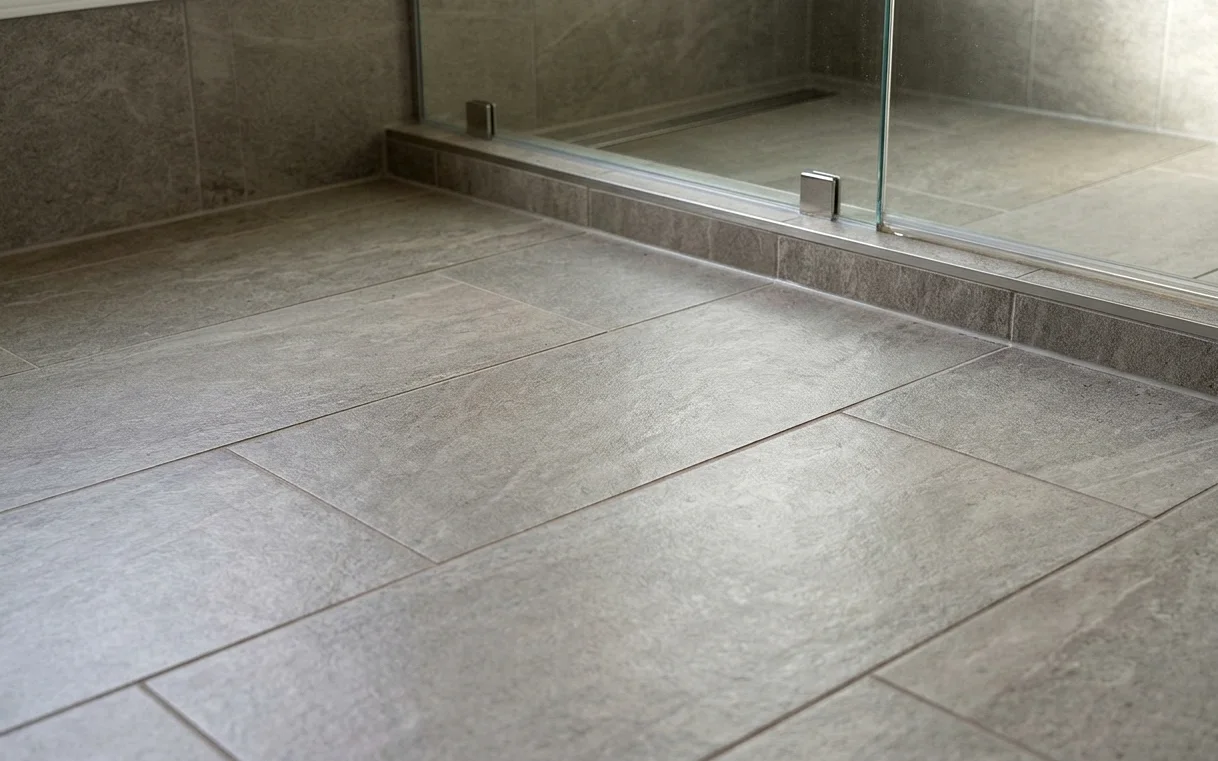
Why Tile Cracks in San Antonio Homes, and How We Prevent It
The clay soil under much of the region expands when it’s wet and shrinks during drought. Slab foundations ride that movement, and rigid tile glued straight to concrete has nowhere to go when the slab shifts. That’s why so many local bathrooms show a hairline crack running straight across the floor.
We can’t stop the ground from moving, but we can keep that movement from reaching the tile. An uncoupling membrane between the slab and the tile absorbs small shifts. Soft movement joints, filled with flexible sealant instead of grout, go at the room perimeter, where the floor meets the tub or shower, and across large floors at regular spacing. It’s a few extra steps that make a big difference years later.
- Uncoupling membrane over the slab before floor tile
- Flexible sealant at every change of plane
- Movement joints across larger floors
- Existing slab cracks bridged with crack isolation
- No tile set directly over a control joint without treatment
Porcelain, Ceramic, Stone or Glass: Matching Tile to the Surface
Each part of a bathroom asks something different of tile. Floors need slip resistance and strength. Shower floors need even more grip and small enough pieces to follow the slope, or a linear drain that lets larger tiles stay flat. Walls care more about weight and looks.
Porcelain is our default for floors and showers because it’s dense, absorbs almost no water, and handles hard water cleaning well. Ceramic works nicely on walls and saves money. Natural stone, like marble or travertine, is beautiful and fits older homes, but it etches with acidic cleaners and needs sealing. Glass mosaic adds a strip of shine in a niche. Our shower tile guide covers slip ratings and sizes in more depth.
Trim pieces finish the edges. Bullnose tile, metal edge profiles or a mitered corner each give a different look where tile stops on a wall or wraps a niche. We decide these during layout so the right pieces are ordered with the field tile, not scrambled for at the end.
Large-Format Tile Needs a Flatter Base
Big tiles are popular for good reason: fewer grout lines, a calm look, and less to clean. But the larger the tile, the flatter the surface underneath has to be. A 24 by 48 inch porcelain panel will rock and crack on a slab with a slight hump that a 12 inch tile would never notice.
Before setting large-format tile, we check the floor with a long straightedge, grind high spots, and fill low ones with a self-leveling underlayment. On walls, we straighten studs or shim them so the backer board sits true. We also use leveling clips during setting so the edges of neighboring tiles line up without lippage you can feel underfoot.
How a Bathroom Tile Job Is Sequenced
Tile is the last visible layer of a long process. Rushing the early steps is what causes the problems people see later.
- Pick the tile, layout and grout color, and order extra for cuts and future repairs
- Remove old tile and backer, then inspect the slab and framing
- Flatten the floor and straighten walls
- Install backer board, membrane and waterproofing in wet areas
- Dry lay the floor pattern and snap center lines so cuts land evenly
- Set tile with the right mortar coverage for each tile size
- Grout, seal where needed, and fill movement joints with sealant
Layout Decisions That Change How the Room Looks
A good layout avoids thin slivers of tile at doorways and along the most visible wall. We center the pattern on the room or on a feature, like the vanity or the shower niche, and carry lines from the floor up into the shower when possible.
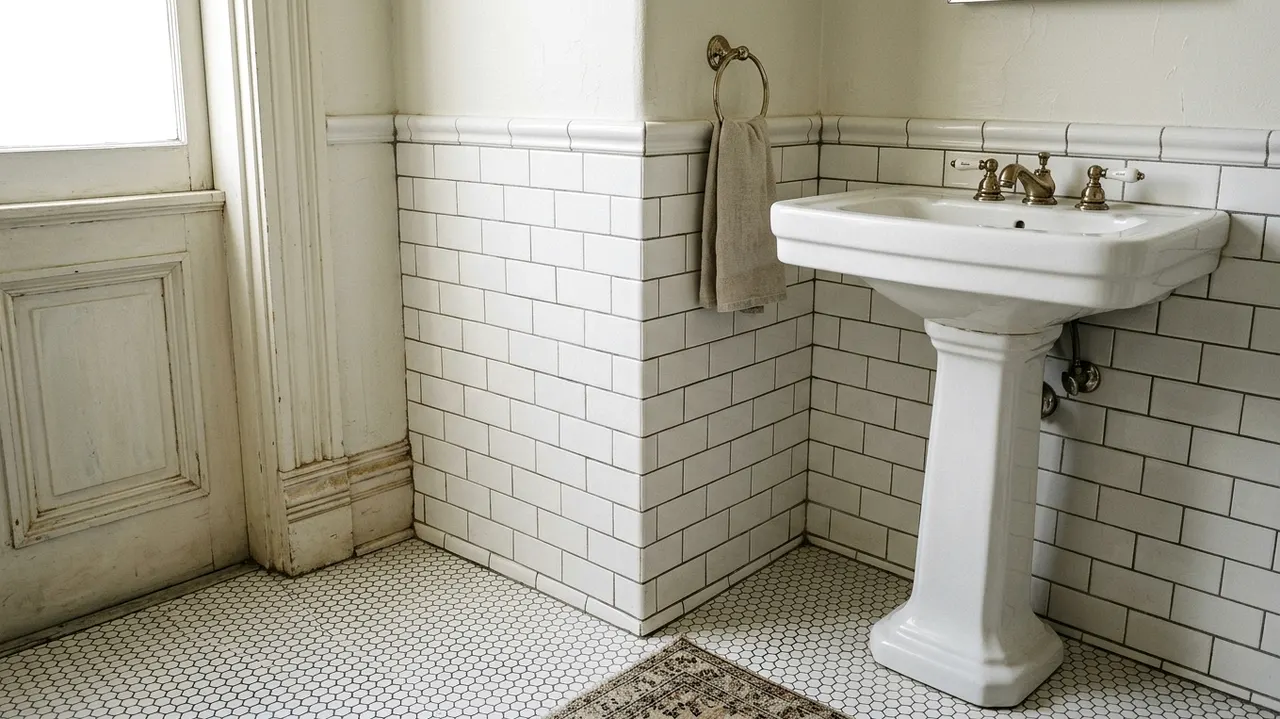
Patterns change the feel too. A straight stack looks modern and calm. A one-third offset works well with long rectangles and avoids the bowed look that a half offset can create. Herringbone and chevron add movement but take more time and more cuts. In older homes in neighborhoods like King William or Tobin Hill, small hex or penny round floors often suit the house better than oversized modern slabs.
Grout, Sealing and Living With Hard Water
Grout is where most bathrooms show their age. Cement grout is porous and absorbs soap, minerals and body oils, which is why light grout turns dingy. Sealing helps, but it wears off in a shower within a year or two.
We often suggest a high-performance or urethane grout for showers and a mid-tone color that hides the white mineral film common with San Antonio water. Epoxy grout is the toughest option for shower floors, though it costs more to install. If you’re replacing tile because the shower leaked behind it, see our leaking shower repair page. For full shower builds that include tile, visit walk-in shower installation. Call us and we’ll bring samples to your home so you can see them in your own light.
Projects that often go with bathroom tile installation
Bathroom Flooring Installation
A bathroom floor takes standing water, hard-water drips, and a slab that shifts with the clay underneath it. We help you pick a material that suits how the room gets used, then prep the base so the new floor stays flat and tight.
Walk-In Shower Installation
A walk-in shower looks simple: tile, a drain and a sheet of glass. The part that decides whether it lasts is underneath, in the slope, the pan and the membrane, and that’s where we spend the most care.
Shower Replacement
Swap a cracked insert, a tired tile stall, or a leaky old valve for a new shower in the same footprint. We open the wall, fix what’s hiding behind it, and rebuild with materials that handle hard water.
Heated Bathroom Floors
Let’s be honest: San Antonio winters are short and mostly mild. Still, porcelain laid over a concrete slab can feel like stepping onto a cold countertop at six in the morning, and that’s the problem a heated floor solves.
Bathroom Tile Installation questions
Why does bathroom tile crack on slab floors in San Antonio?
Expansive clay soil makes slabs shift slightly through wet and dry seasons. Tile stuck straight to concrete can’t flex, so it cracks along the line of movement. An uncoupling membrane under the tile and flexible joints at the edges let the floor move without breaking the tile on top.
Can new bathroom tile go over existing tile?
On some floors, yes, if the old tile is firmly attached, flat and not cracked. It raises the floor height, which can cause problems at doorways and the toilet flange. In showers we don’t recommend it, because the waterproofing behind old tile is unknown. Removing the old tile is usually the safer choice.
How long does bathroom tile installation take?
A floor alone in a typical bathroom often takes 2 to 3 days including prep, setting and grout. Adding shower walls and a shower floor usually extends it to 5 to 9 working days, since waterproofing and the flood test come first. Large-format or patterned tile adds time.
What grout color hides hard water stains in bathroom tile?
Mid-tone grays, warm beiges and grout that closely matches the tile tend to hide the white film from hard water better than bright white or very dark grout. Pairing the color with a stain-resistant urethane or epoxy grout keeps it looking consistent for longer.
How much extra bathroom tile should I order?
We usually suggest 10 to 15 percent more than the measured area for straight layouts, and more for diagonal or herringbone patterns. Keep a full box after the job is done. If a tile ever cracks or a plumbing repair needs access, matching tile from the same batch makes the patch disappear.