Which Bathroom Floor Stands Up to Water and Hard-Water Drips?
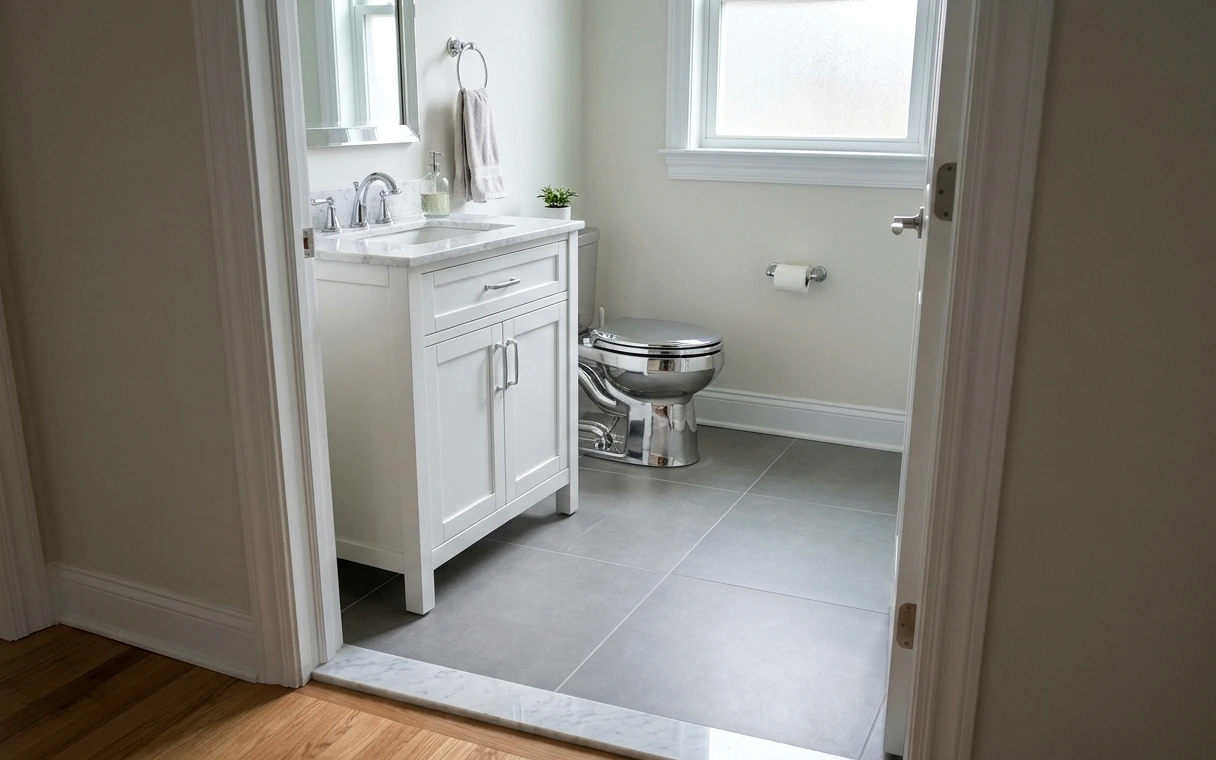
Porcelain tile is still the workhorse for wet rooms here. It doesn’t absorb water, it shrugs off the cleaners people use to fight calcium spots, and it comes in looks ranging from plain matte stone to long wood-grain planks. Natural stone like travertine or marble is beautiful, but it needs sealing and gentle cleaning, and hard water dulls polished marble faster than most people expect.
Luxury vinyl plank is a fair pick for a guest bath or a kids' bath on a tighter budget. Good LVP is waterproof on its face, yet water that slips under the edges at the tub or toilet can sit there for weeks, so we caulk and trim those edges with care. Sheet vinyl costs the least and has almost no seams, though it dents easily and tends to look dated sooner.
- Porcelain tile: the best all-around choice for full baths that see daily showers
- Matte or textured finish: better grip when feet are wet
- Larger format tile: fewer grout lines to scrub, but it needs a flatter base
- LVP: warmer underfoot and quicker to install, best kept away from very wet zones
- Natural stone: a rich look, with sealing and pH-neutral cleaners as part of the deal
Why Slab Prep Decides How Long Your New Floor Lasts
Most homes across Bexar County sit on concrete slabs poured over expansive clay. That soil swells when it’s wet and shrinks during drought, so hairline cracks in the concrete are common. Tile set straight over a moving crack usually splits along the same line within a season or two, which is why we study the slab before anything new goes down.
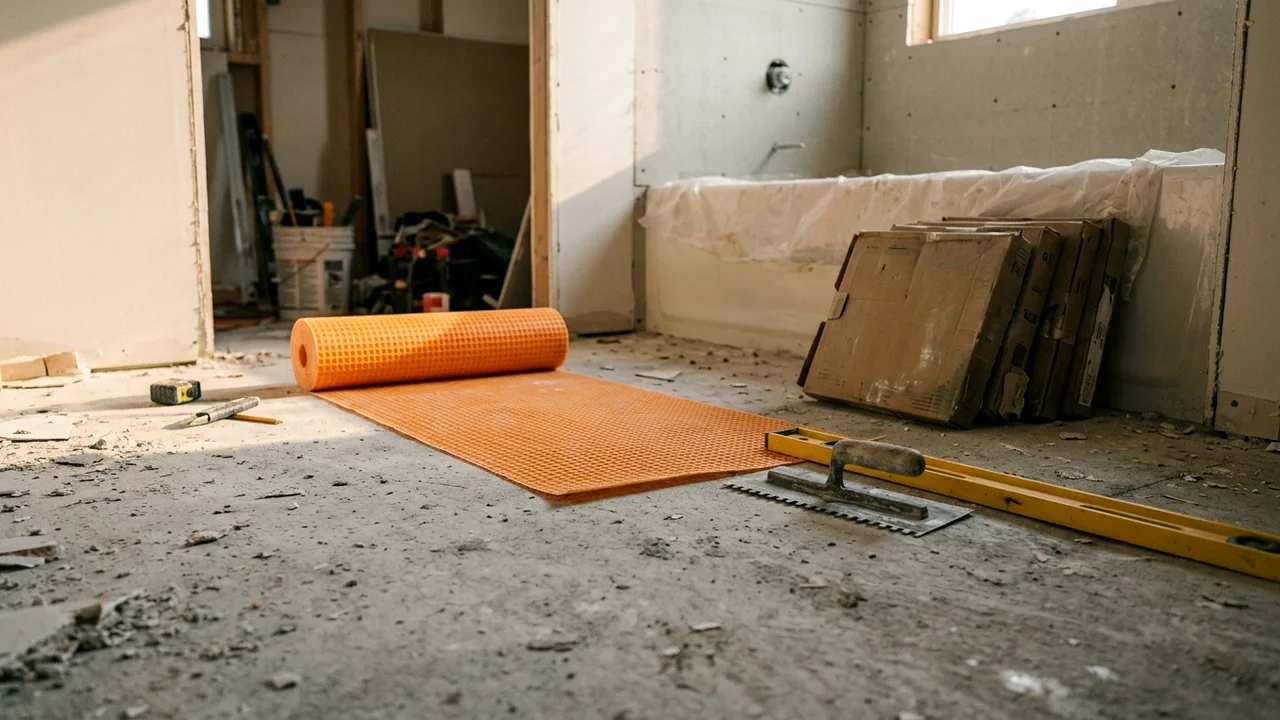
With the old floor off, we grind high spots, fill low ones with patch or self-leveler, and apply a crack isolation membrane over hairline cracks. Upstairs baths and older pier-and-beam houses get a different check: joist stiffness and plywood condition, because a bouncy subfloor breaks grout just as surely. A crack with one side higher than the other is a foundation question, and we’ll say so before tiling over it. Our guide on how slab movement affects bathroom work goes deeper.
How a Bathroom Floor Installation Runs, Start to Finish
A floor-only job follows the same order nearly every time. Most of the schedule comes down to prep and cure time rather than the tile itself.
- Walkthrough: we measure, check the slab or subfloor, and settle tile, layout, and where the doorway transition lands
- Protect and remove: the toilet comes out, the vanity is lifted or shielded, and old tile and mortar are broken out and hauled away
- Prep: grinding, patching, leveling, and crack isolation membrane wherever the slab calls for it
- Layout and set: tile is dry-laid from the most visible line, then set with full mortar coverage
- Grout and seal: grout is matched to the room, allowed to cure, and sealed if it’s cement-based
- Reset: a fresh toilet seal, the toilet bolted down level, and baseboard, shoe molding, and threshold installed
Should the Vanity Come Out Before the New Floor Goes In?
This is one of the first decisions to make. Tiling around an existing vanity saves money and leaves your countertop alone, but the old floor or bare slab stays hidden under the cabinet. Later, a vanity with a different footprint exposes that gap. Pulling the vanity lets us run tile wall to wall, and we usually recommend it if a new cabinet is anywhere on your list for the next few years. Some homeowners end up swapping the vanity at the same time for that reason.
Toilet height is the other detail people miss. A thicker floor raises the finished surface, so the toilet flange may need an extender or a replacement to seal properly. We check that during demo instead of hoping a stacked wax ring will make up the difference.
Warning Signs Your Old Bathroom Floor Is Hiding Damage
Some floor problems are only cosmetic. Others mean water has been sitting under the surface for a while. If we find wet subfloor, rotted plywood, or a weeping supply line during demo, we stop, show you, and price the fix before going further, the same way we handle bathroom water damage repairs.
- Soft or spongy spots near the toilet or tub, often from a slow leak
- Grout that keeps cracking along the same line
- Tiles that sound hollow when you tap them
- Dark staining or a musty smell around the base of the toilet
- Vinyl seams lifting or curling near the tub
What Moves the Price of a New Bathroom Floor?
Square footage matters less than you’d think in a small room. Labor for demo, prep, cuts around the toilet and tub, and trim stays similar whether the floor is 40 or 60 square feet, so small baths cost more per foot. Thick old mortar beds, common in mid-century ranch homes, also take far longer to break out than a thin layer of modern thinset.
Tile choice moves the number next. Plain porcelain sits at the low end, while patterned tile, stone, or a herringbone layout costs more and takes longer to set. Radiant heat under tile is its own line item, explained on our page about warm tile floors. For a real number on your room, give us a ring and we’ll set up a walkthrough.
Projects that often go with bathroom flooring installation
Bathroom Tile Installation
Good tile work is mostly preparation. Flat walls, a proper waterproof layer, and movement joints where the slab will shift decide whether a bathroom floor or shower stays crack free. We spend our time there, then set the tile carefully.
Heated Bathroom Floors
Let’s be honest: San Antonio winters are short and mostly mild. Still, porcelain laid over a concrete slab can feel like stepping onto a cold countertop at six in the morning, and that’s the problem a heated floor solves.
Bathroom Vanity Installation
A new vanity changes how a bathroom works every morning: more drawer space, a second sink, a top that doesn’t stain. We handle the cabinet, the countertop, the plumbing, and the floor and wall gaps the old one leaves behind.
Small Bathroom Remodel
In a 5-by-8 bathroom, the door swing, the vanity depth and the shower curtain rod all compete for the same few feet. We remodel small baths by solving those conflicts first, then making the room feel larger with light and finish choices.
Bathroom Flooring Installation questions
Can new bathroom flooring go right over the existing tile in my San Antonio home?
Sometimes, but we rarely suggest it. Tile over tile raises the floor height, can leave the toilet flange too low, and may make the door rub. It also hides whatever is going on underneath. If the old tile is tight, flat, and free of cracks, a floating LVP overlay can work, but full removal gives a better and longer-lasting result in most bathrooms.
How soon can we walk on a newly tiled bathroom floor?
Light foot traffic is usually fine about a day after grouting, as long as you skip shoes with hard heels and don’t drag anything across it. We set the toilet back once the mortar has firmed up, so the room is usable quickly. Sealing cement grout comes a bit later, after it has cured, and we’ll tell you the timing for the products on your floor.
Is luxury vinyl plank a good bathroom flooring choice for a busy family bath?
It can be. LVP is warm, quiet, forgiving if something gets dropped, and quick to install. The weak spots are the edges at the tub and toilet, where water can creep under the planks. We seal those edges and use trim rather than leaving cut ends exposed. For a bath where kids splash a lot, porcelain tile is still the safer long-term pick.
Why does bathroom floor tile keep cracking in San Antonio slab homes?
Usually because the slab underneath moves. Clay soil here swells and shrinks with rain and drought, and hairline cracks in the concrete telegraph up through tile set directly on top. Weak mortar coverage and poor prep make it worse. A crack isolation membrane over the slab absorbs small movement, which is why we include it wherever we see cracking.
Does the toilet have to come out for a bathroom flooring installation?
Yes. Tiling around a toilet leaves an ugly cut line and traps water at the base, so we always pull it. That also lets us look at the flange and the subfloor around it, which is where hidden leaks tend to show up. The toilet goes back on a new seal, and if it’s old or rocks, it’s a good moment to replace it.