Is Your Kitchen Ready for the Appliance You Bought?
Delivery crews drop off and plug in. They usually won’t cut a cabinet, add a circuit or move a gas valve, and that’s where most new appliances stall. Before anything arrives, we read the installation guide for each unit and compare it with what’s behind your walls. That check turns up most of the surprises while there’s still time to deal with them calmly.
Older San Antonio homes are the ones that catch people out. A 1960s ranch in Windcrest or Oak Hills may have a single circuit feeding the dishwasher and disposal, a 30-amp range outlet where a new induction cooktop needs 40 or 50, and a panel with no open slots. Newer homes in Stone Oak or Cibolo generally have the circuits but still need cabinet changes for wider or deeper units.
- Cutout width, height and depth match the spec sheet
- Dedicated circuit at the right amperage and voltage
- Gas shutoff within reach and sized for the BTU rating
- Water line for the refrigerator or dishwasher in good shape
- Clear route for hood ducting to the outside
- Room for doors to swing open past handles and walls
Gas, Electric or Induction: What Changes at the Wall
Switching fuels is the biggest jump in cost. Going from an electric range to gas means a new gas line from the nearest branch, a shutoff valve and a leak test, and it often needs a permit. Going from gas to induction needs a 240-volt circuit sized for the cooktop, sometimes a panel upgrade, and a capped gas line.
Induction has caught on here because it puts far less heat into the room than gas does. In a San Antonio summer, that’s a real comfort difference, and the air conditioner works less while you cook. Induction does need magnetic cookware, so test your pans with a fridge magnet before you decide.
Range Hoods That Actually Pull Air Outside
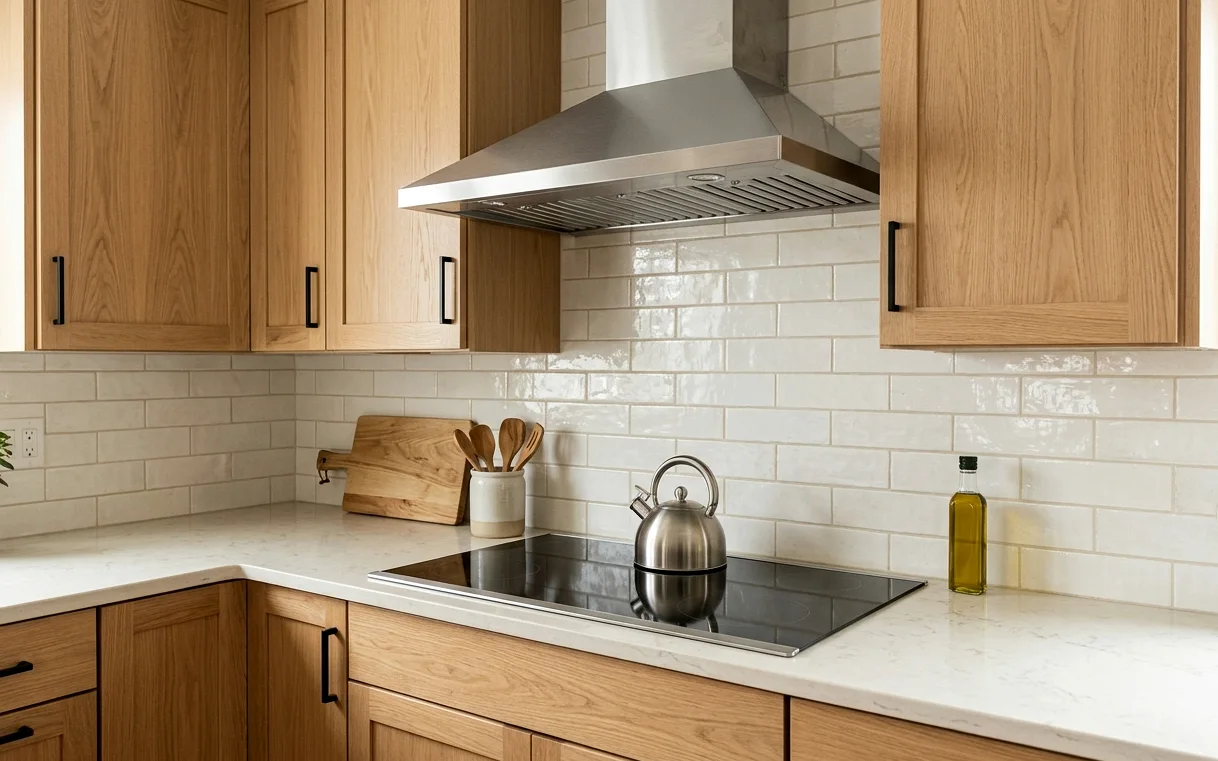
Plenty of kitchens here have a recirculating microwave that blows grease and steam back into the room. In a humid climate that moisture settles on the ceiling and cabinet tops. A hood ducted to the outside, with a capture area at least as wide as the cooktop, does a much better job.
Ducting usually exits through the roof or an exterior wall. We pick the shortest, straightest path with smooth metal duct, and we seal every joint. Very powerful hoods can need makeup air so they don’t pull air down a water heater flue or through gaps, and we’ll talk through that if you choose a high-output model. When cabinets change to fit a new hood, we coordinate with any cabinet work so the hood sits at the right height.
- Hood ducts vented into the attic instead of outside
- Flexible foil duct on a hood meant for rigid metal
- Gas ranges set on a flexible connector that’s kinked or reused
- Dishwashers hooked up without a high loop or air gap
- Wall ovens on a circuit too small for their rating
Built-In Refrigerators, Wall Ovens and Panel-Ready Units
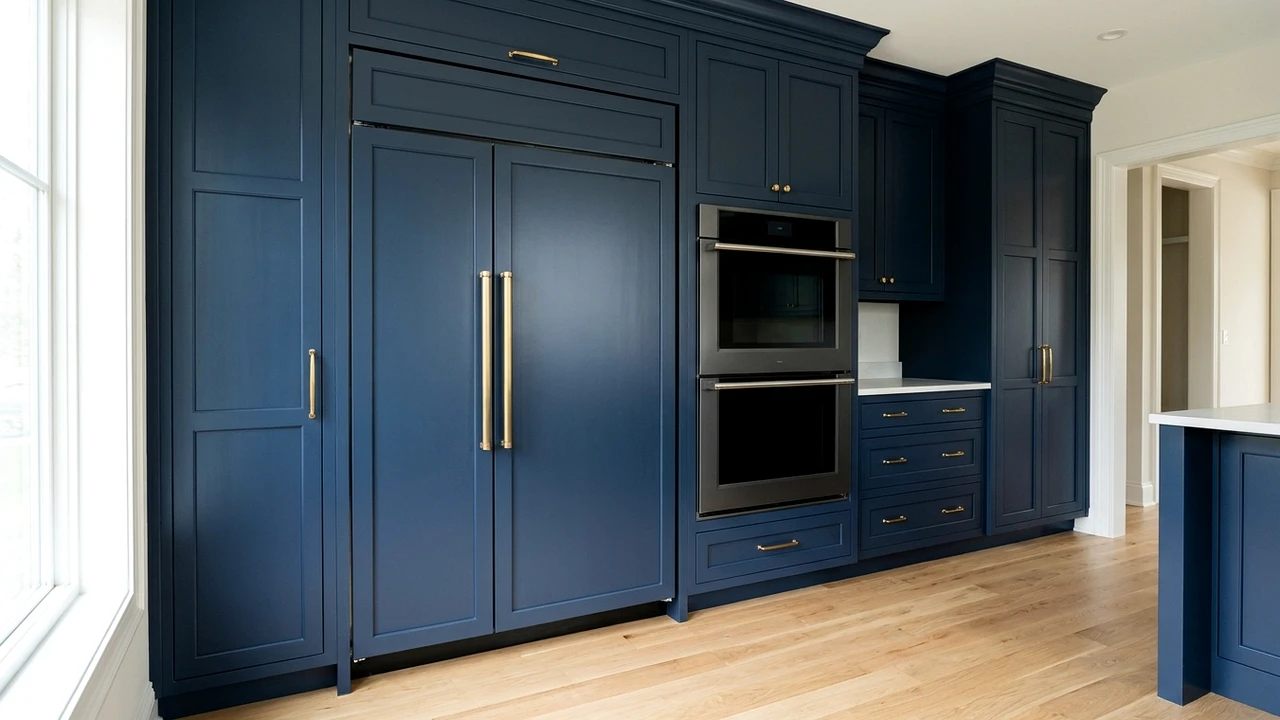
Built-in and panel-ready appliances need a cabinet opening cut to a tight tolerance. A built-in refrigerator may need an opening within a quarter inch of spec, with a level floor and anti-tip brackets. Wall ovens need a cabinet that can carry the weight and a set cutout height. Panel-ready dishwashers need a cabinet door panel mounted to the front, which has to line up with the doors beside it.
Converting a freestanding fridge spot to a built-in usually means reworking the cabinets around it, and sometimes the soffit above. If a wider unit is the goal, look at the adjoining base cabinet first, since stealing a few inches from it is often cheaper than moving a wall.
Hard Water and Your New Dishwasher, Ice Maker and Fridge Filter
San Antonio’s hard water leaves scale on anything that heats or freezes water. Dishwashers develop cloudy glassware and clogged spray arms, ice makers jam and refrigerator filters load up faster than the box suggests. When you have a whole-house softener, those problems ease a lot. When you don’t, we’d suggest a filter at the fridge line and a rinse aid in the dishwasher from day one.
We use new braided supply lines and a fresh shutoff valve on every water connection, since old valves often seize from mineral buildup. Our guide on hard water and new fixtures explains what to expect over the first few years.
What Happens on Install Day
Simple swaps finish in a single visit. Jobs with circuits, gas or cabinet changes take longer, and inspections may come in between.
- Pre-install visit: we measure, test circuits and gas, and confirm cutouts against each spec sheet.
- Prep work: new circuits, gas lines, valves or ductwork are installed, with permits filed where required.
- Cabinet changes: openings are trimmed, filler strips added and support brackets set.
- Placement: appliances are leveled, anchored and connected to power, gas and water.
- Testing: every burner, element, cycle and ice maker is run, and gas fittings are leak tested.
- Cleanup and walkthrough: packing is hauled off and we show you the shutoffs and filter locations.
Projects that often go with kitchen appliance installation
Kitchen Remodeling
A good kitchen remodel starts with the house, not a catalog photo. We design and build full kitchen remodels across San Antonio, sorting out layout, plumbing, power and permits before anyone picks a cabinet color.
Custom Kitchen Cabinets
Stock cabinets come in three-inch steps, and real kitchens rarely do. We design custom cabinets around your walls, appliances and the way you cook, so the filler strips disappear and every inch does a job.
Kitchen Lighting Installation
Plenty of kitchens have one bright fixture in the middle of the ceiling and a shadow over every counter. We plan lighting in layers so you can see what you’re chopping, set a mood at night and stop squinting at the stove.
Kitchen Sink and Faucet Replacement
A dripping faucet crusted with white scale is a very San Antonio problem. We replace kitchen faucets and sinks with fixtures that handle hard water, swap tired shutoff valves, and leave the cabinet below dry and tidy.
Kitchen Appliance Installation questions
Can you install a gas range in a San Antonio kitchen that only has electric?
Yes, if the house has gas service. We run a new line from the nearest branch to a shutoff valve behind the range, pressure test it and connect the range with a new flexible connector. That work usually needs a permit. If the house has no gas at all, induction is often the simpler path.
Do I need an electrician to install an induction cooktop in an older home?
You need someone qualified to add or upgrade the circuit, since most induction cooktops call for a dedicated 240-volt circuit at 40 or 50 amps. We check your panel’s capacity and open slots first. Some older homes need a panel upgrade, and we’ll tell you that before you buy so nothing sits unused.
How much does a ducted range hood installation cost in San Antonio?
Replacing a hood on existing ductwork usually runs $485 to $1,140. Adding a new duct route through the roof or an exterior wall, plus a new circuit, typically lands around $1,350 to $3,280. Long runs, tile repair and high-output hoods that need makeup air push it higher.
Will a new built-in refrigerator fit where my old freestanding one was?
Sometimes, but rarely without changes. Built-ins need exact width and height, a level floor and often a deeper cabinet above. We measure the opening against the spec sheet before you order. If it’s short by an inch or two, we can usually trim an adjoining cabinet or the panel above to make room.