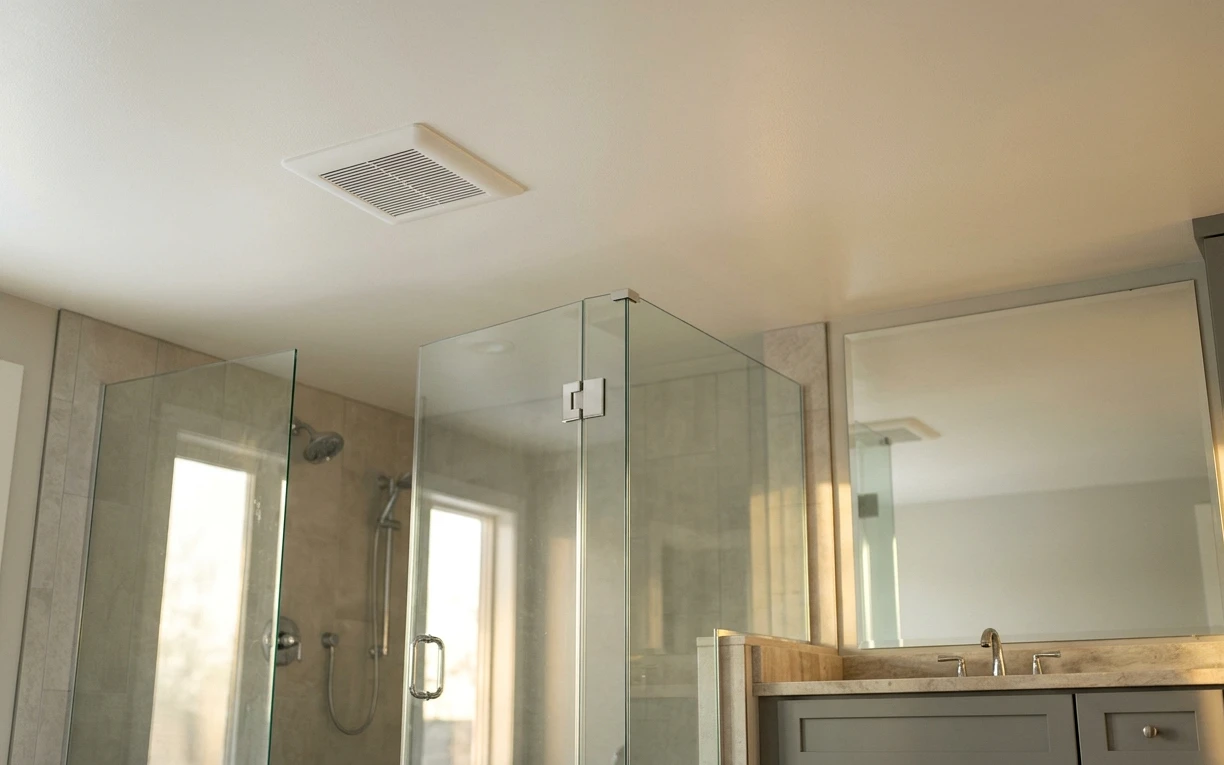
Is Your Bathroom Fan Actually Moving Air?
Plenty of San Antonio bathrooms have a fan that hums but barely pulls any air. Builder-grade units from the 1980s and 1990s were often undersized, and years of dust on the grille and housing cut their output further. Hold a single square of toilet paper against the grille with the fan on. If it doesn’t stick, the fan isn’t doing its job.
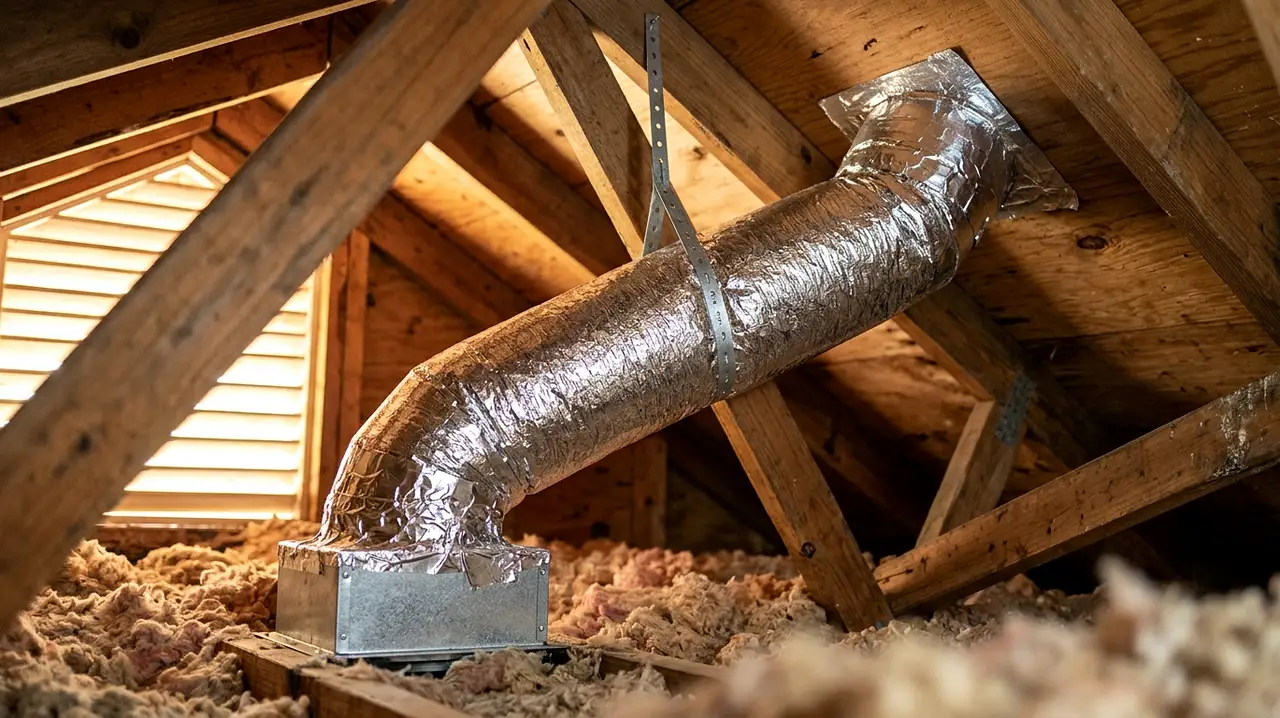
The other common culprit is the duct. We regularly find flex duct crushed under attic insulation, disconnected from the fan, or blowing straight into the attic instead of outside. That last one moves the moisture problem overhead, where it can dampen insulation and roof decking during humid stretches.
- Mirror stays fogged long after the shower is off
- Black or gray spotting on the ceiling paint or in the grout
- Paint bubbling or peeling near the shower
- A musty smell that comes back soon after cleaning
- Loud rattling, or a fan that runs but feels like it moves nothing
Sizing a Fan for How Your Bathroom Is Used
Fans are rated in cubic feet per minute. A rough rule for a standard bathroom is about one CFM per square foot of floor, with a 50 CFM minimum. Larger primary baths, rooms with tall ceilings, or a separate enclosed toilet area may need more capacity or a second fan, and a steam shower needs its own planning.
Noise matters too, because people simply turn off loud fans. Sound is rated in sones, and a quiet model around 1.0 sone or lower is barely noticeable over running water. Duct length and the number of bends also reduce real airflow, so we pick a fan with enough headroom for the duct run in your attic, not just the number on the box.
Venting Outdoors the Right Way in a Texas Attic
Attic temperatures here climb very high in summer, while the air leaving your shower is warm and wet. Where those meet, condensation can build up inside a long or sagging duct and drip back down into the fan. We keep duct runs short, use rigid or semi-rigid duct where we can, slope it slightly toward the exterior, and seal joints with foil tape rather than cloth duct tape.
The duct ends at a roof cap or soffit vent with a damper to stop backdrafts and keep pests out. A vent that simply points at a soffit without connecting to it lets moist air drift right back into the attic, so we terminate it through a dedicated fitting.
How a Bathroom Fan Replacement or New Install Goes
Here’s the usual sequence on a single-story home with reasonable attic access.
- Check the room: we measure the bathroom, look at the current fan and switch, and inspect the attic side
- Pick the unit: fan size, sone rating, and any light, heater, or humidity sensor are chosen
- Open the ceiling: the old housing comes out, or a new opening is cut between joists
- Duct and vent: a new duct is run and fastened to a roof or soffit termination with a damper
- Wire and control: the fan is connected to a timer, humidity-sensing switch, or standard switch
- Patch and test: the ceiling is patched and painted around the grille, then airflow is checked
Timers and Humidity Sensors Do the Remembering for You
Most moisture damage happens because the fan gets switched off the moment someone leaves the room. Running it for about 20 minutes after a shower clears most of the leftover humidity. A countdown timer switch makes that automatic, and a humidity-sensing fan or switch goes further by kicking on whenever moisture rises and shutting off once it drops.
For kids' baths and guest rooms, a humidity sensor is the one feature we push hardest. It’s a small upgrade that protects the paint and grout from forgetful users, and it fits neatly into a larger bathroom remodel or works as a standalone swap.
Fans, Lights, and Ceilings as Part of a Bigger Update
Combination fan-lights save a ceiling opening in small rooms, but the light is often dim. In a bathroom getting new lighting and mirrors, we usually keep the fan separate and place it near the shower, with task lighting where you actually need it at the vanity.
If a fan has failed for years, the ceiling or wall above the shower may already show mold or soft drywall. We’ll point that out and, if needed, replace the damaged section with moisture-resistant board. Older homes inside the loop may have plaster ceilings or tight attics, which add some time. Our bathroom cost guide shows how ventilation fits into an overall budget, and you can give us a ring to schedule a look at your attic.
Projects that often go with bathroom exhaust fan installation
Bathroom Lighting and Mirrors
One overhead fixture above the mirror throws shadows under your eyes and chin, right where you need to see clearly. Better placement, the right color of light, and a mirror sized to the vanity fix most of that in a day or two.
Bathroom Remodeling
A bathroom remodel succeeds or fails behind the tile. We plan the layout, drains, waterproofing and ventilation first, then help you pick the finishes, so the room looks good on day one and still works years from now.
Small Bathroom Remodel
In a 5-by-8 bathroom, the door swing, the vanity depth and the shower curtain rod all compete for the same few feet. We remodel small baths by solving those conflicts first, then making the room feel larger with light and finish choices.
Kitchen and Bath Water Damage Repair
Water from a failed supply line or a slow drain leak can sit inside a cabinet base or behind a tub for months before anyone notices. We find the source, dry what got wet, and rebuild the finishes so the room is whole again.
Bathroom Exhaust Fan Installation questions
Can a bathroom exhaust fan vent into the attic in a San Antonio home?
It shouldn’t. Venting into the attic dumps warm, wet air onto the insulation and roof decking, which can lead to mold and rot, especially during humid weeks. Current practice is to duct the fan all the way to the exterior through a roof cap or a dedicated soffit or wall vent. We fix attic-dumping fans regularly, often while replacing the fan itself.
How long should I run a bathroom exhaust fan after a shower?
About 20 minutes after you finish usually clears the room, though larger bathrooms or long hot showers may need more. The trouble is remembering. A timer switch or a humidity-sensing control handles it automatically, which is why we suggest one on almost every bathroom fan installation. It keeps paint and grout dry without anyone having to think about it.
Why does my bathroom fan drip water from the ceiling?
Usually it’s condensation. Warm shower air cools inside the duct as it crosses a hot or, in winter, cooler attic, and the water runs back to the fan. Long, sagging, or uninsulated ducts make it worse, as does a vent cap without a damper. Shortening the run, insulating the duct, and sloping it toward the outside normally solves the drip.
Is a quieter bathroom exhaust fan worth the extra cost?
In most homes, yes. A fan that’s loud gets turned off early, and then it isn’t protecting anything. Quiet models around one sone or lower cost a bit more but tend to have better motors and run longer without complaint. For a bathroom next to a bedroom, a quiet fan also means someone can shower early without waking the house.
Can you add an exhaust fan to a San Antonio bathroom that never had one?
Usually, yes. Many older homes inside the loop only had a window for ventilation. We find a joist bay close to the shower, cut a new ceiling opening, run duct to a roof or soffit vent, and bring power to a new switch. Two-story homes or bathrooms with no attic above may need a wall vent instead, which we sort out on the walkthrough.