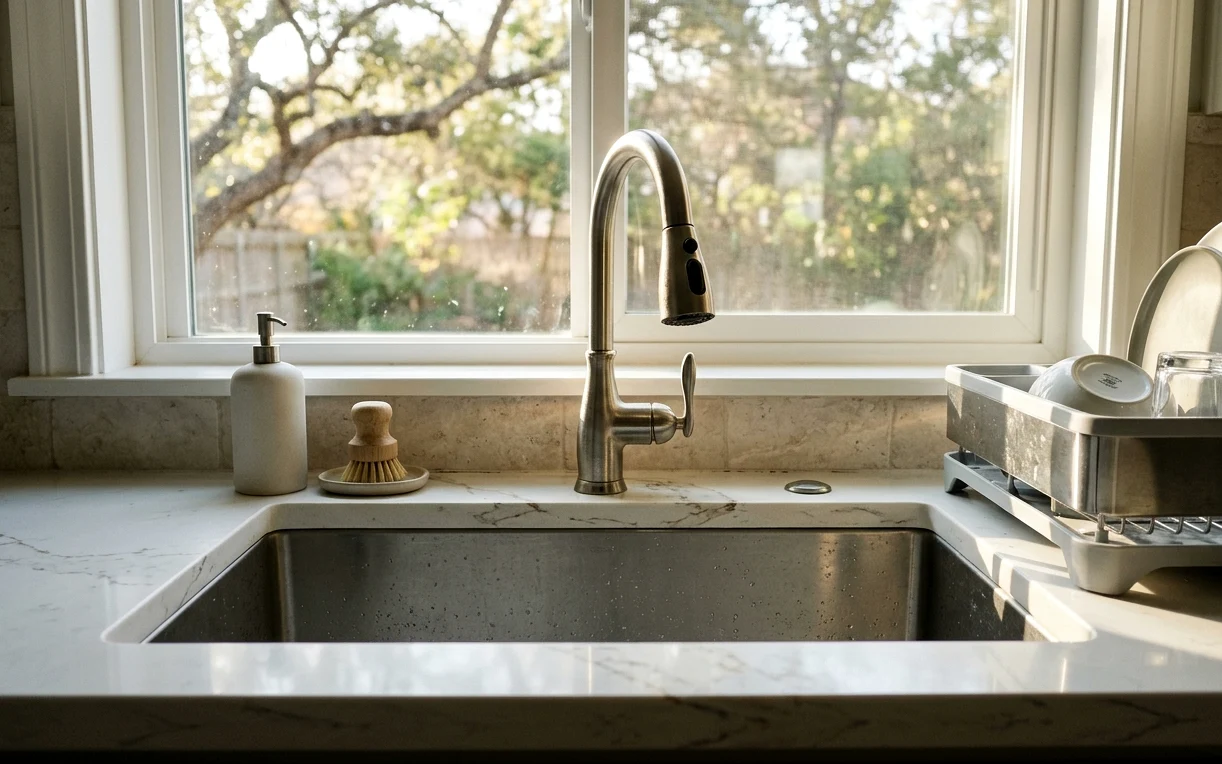
What Hard Water Does to a Kitchen Faucet
San Antonio’s water comes largely from the Edwards Aquifer, and it carries a lot of dissolved minerals. That’s why you see white crust on the aerator, a spray head that sputters and a handle that gets stiff. Inside the faucet, scale builds up on the cartridge until it can’t seal, and that’s when the slow drip starts.
A new cartridge sometimes fixes a drip, but on older faucets the parts can be hard to find, and the finish is often already pitted. If the faucet is more than ten or fifteen years old and leaking, replacing it is usually the better money. The same scale also crusts shutoff valves under the sink, so we often replace those during the same visit.
- White crust around the base of the spout or on the aerator.
- A pull-down spray that sprays sideways or barely flows.
- A handle that’s stiff to turn or won’t stay put.
- A drip that comes back soon after a cartridge change.
- Water stains or soft spots on the floor of the sink cabinet.
Choosing a Faucet That Lasts Here
Look for ceramic disc cartridges, which handle mineral grit better than older washer or ball designs. A faucet whose cartridge is easy to buy and swap will save you trouble later. Spray heads with soft rubber nozzles let you rub scale off with a thumb instead of soaking the head in vinegar.
Finish choice matters in hard water. Polished chrome is durable but shows spots. Brushed nickel, matte black and stainless finishes hide mineral marks better. Matte black looks great, but very cheap versions can wear at the handle, so stick with reputable brands. Touch and touchless faucets are convenient, though they add a battery or power connection under the sink.
Size the faucet to the sink, too. A tall gooseneck spout over a shallow sink splashes, while a low spout over a deep single bowl makes it hard to fill a stockpot. If there’s a window above the sink, check that the spout and handle clear the sill when the handle swings back.
Picking a Sink Style and Material
Undermount sinks sit beneath the counter edge, so crumbs wipe straight in. They need stone or solid surface counters and careful support. Drop-in sinks rest on the counter with a rim, which is easier to swap and works with laminate. Farmhouse or apron-front sinks need a cabinet built or modified to hold them, plus extra support for their weight.
Stainless steel is forgiving, quiet if it has sound padding, and hides hard water spots better than dark finishes. Composite granite sinks resist scratches and look rich but can show white mineral film on dark colors. Fireclay and cast iron suit older homes in neighborhoods like King William or Monte Vista, but they’re heavy and need solid support.
Replacing an Undermount Sink in a Stone Counter
Swapping an undermount sink is more involved than replacing a faucet. The old sink is glued and clipped to the underside of the stone. Removing it means cutting the sealant, supporting the stone, and making sure the new sink fits the existing cutout. A new sink with a different shape or size may need the opening recut, which a stone fabricator can sometimes do on site.
We check the fit before buying anything. If you’re replacing counters at the same time, the new sink is mounted during the countertop installation instead, as described on our quartz countertop page.
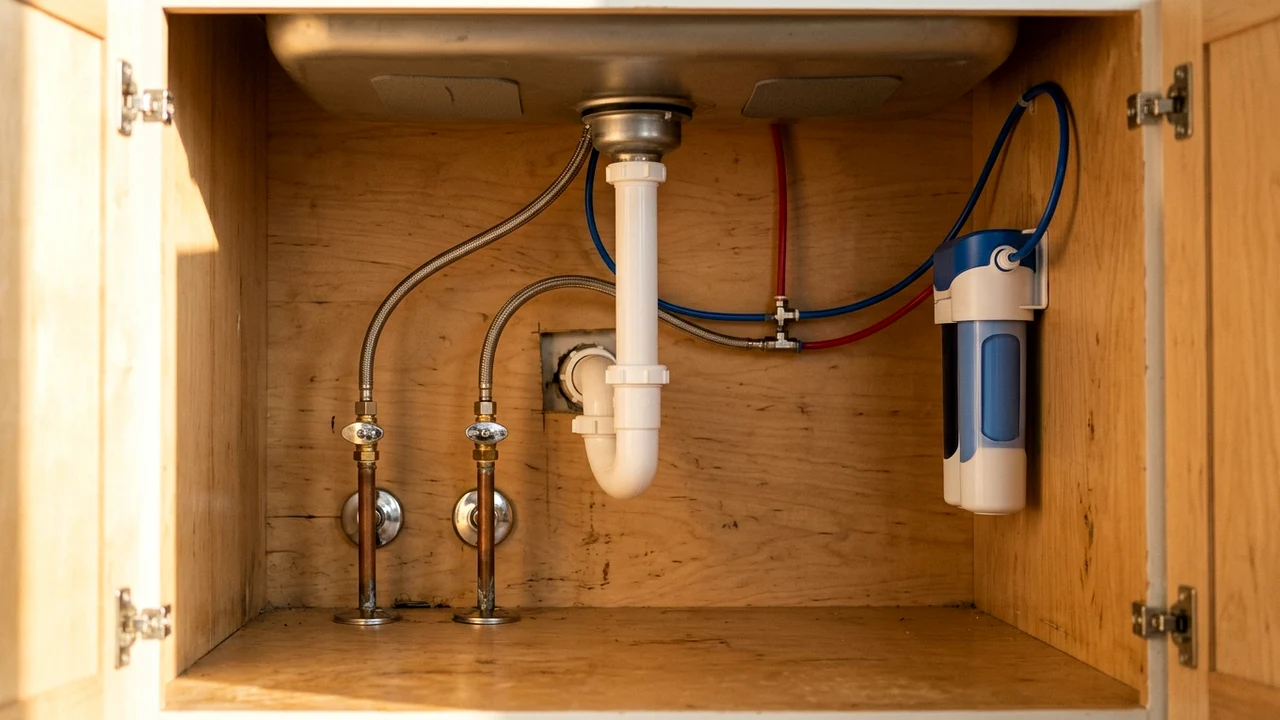
How a Sink and Faucet Swap Goes
For a sink and faucet replacement without new counters, a typical visit looks like this.
- Shut off and drain: water is turned off at the valves or main, and lines are drained.
- Disconnect: the disposal, drain trap, supply lines and old faucet come off.
- Remove the old sink: sealant is cut, clips released and the sink lifted out with the counter supported.
- Check and replace valves: crusted shutoff valves and supply lines are swapped for new ones.
- Set the new sink: it’s mounted, sealed and supported, and given time to set if needed.
- Install and test: the faucet, drain, disposal and dishwasher line are connected and leak-tested.
Softeners, Filters and Protecting the New Fixtures
Many San Antonio homeowners add a water softener or an under-sink filter around the same time as a faucet upgrade. A whole-house softener reduces scale everywhere. A filter faucet or reverse osmosis system under the sink improves drinking water but doesn’t stop scale on the main faucet. If you’re planning either, we leave room and the right connections under the sink.
Simple habits help too. Wipe the faucet dry after heavy use, clean the aerator every few months, and look under the sink for drips. If you find water damage under there, our water damage repair team can fix the cabinet floor. For more on fixtures and scale, read our hard water fixture guide, or talk it through with us by phone.
Projects that often go with kitchen sink and faucet replacement
Kitchen Remodeling
A good kitchen remodel starts with the house, not a catalog photo. We design and build full kitchen remodels across San Antonio, sorting out layout, plumbing, power and permits before anyone picks a cabinet color.
Quartz Countertops
Quartz gives you a consistent, low-maintenance surface that shrugs off coffee, wine and hard water spots. We plan the slab layout, seams and edges with you, then template and install once the cabinets are set and level.
Kitchen and Bath Water Damage Repair
Water from a failed supply line or a slow drain leak can sit inside a cabinet base or behind a tub for months before anyone notices. We find the source, dry what got wet, and rebuild the finishes so the room is whole again.
Kitchen Backsplash Installation
A backsplash is small in square footage and huge in how a kitchen looks. We plan the layout, center the pattern on what your eye sees first, and finish every edge so nothing looks like an afterthought.
Kitchen Sink and Faucet Replacement questions
How long does a kitchen faucet last in San Antonio’s hard water?
It varies a lot by quality and water conditions. Cheaper faucets with plastic parts can start dripping within a few years. Good faucets with ceramic disc cartridges often last much longer, especially with a water softener. Cleaning the aerator and replacing a cartridge when needed keeps a quality faucet going.
Can a new kitchen sink fit my existing countertop cutout?
Often, if you choose a sink close to the old one’s size and shape. Drop-in sinks are easiest to match. Undermount sinks must fit the stone opening, and a larger sink may need the cutout enlarged by a fabricator. We measure the opening and check sink specs before ordering anything.
Should I replace the shutoff valves during kitchen sink and faucet replacement?
Usually, yes. Old multi-turn valves often seize from scale and may not shut off fully, and they can leak when finally turned. New quarter-turn valves cost little and are quick to install while everything is already disconnected. New braided supply lines are a good idea too.
What kitchen faucet finish hides hard water spots best?
Brushed nickel and brushed stainless hide water spots best. Matte black looks sleek and hides some spotting but can show white mineral marks in very hard water. Polished chrome is durable and easy to clean but shows every spot. If you wipe the faucet often, any of these can work.
Is it worth adding a filter faucet when replacing a kitchen sink?
Many San Antonio homeowners find it worthwhile for better-tasting drinking water. A separate filter tap or a combo faucet connects to a filter or reverse osmosis unit under the sink. It needs cabinet space and sometimes an outlet. It won’t reduce scale on your main faucet, which takes a softener.