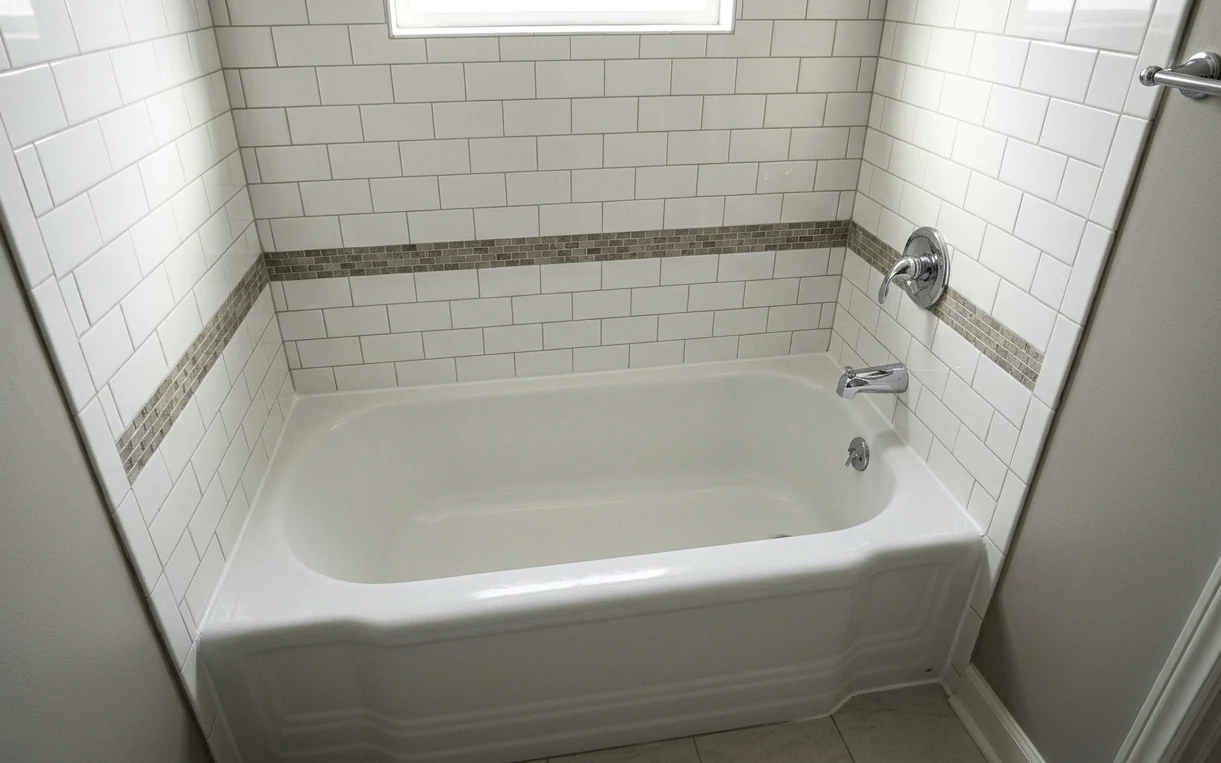
Signs Your Old Tub Has Reached the End
Tubs rarely fail all at once. They wear out in small ways that get worse each year, and by the time water shows up on a ceiling or a baseboard, the damage underneath has usually been building for a while.
Press your foot on the tub floor near the drain. If it gives, cracks, or creaks, the support under it has broken down. Look at the caulk line along the wall: if it keeps splitting no matter how often you redo it, the tub is moving. Both are signs that the problem is the tub, not the caulk.
- Hairline cracks or soft spots in an acrylic or fiberglass floor
- Rust spots or chips through the enamel on a steel tub
- Water stains on the ceiling below a second-floor bath
- A drain that keeps leaking after new washers and putty
- Caulk that splits again within weeks
Picking a Replacement Tub That Actually Fits the Space
The alcove is the boss. Most homes here have a 60-inch opening with walls on three sides, and the new tub has to match that length, the drain side, and the height of the tile above it. Within those limits you still have real choices.
Enameled cast iron is heavy, quiet, and holds heat for a long soak, though it takes extra hands to carry upstairs. Enameled steel is lighter and inexpensive but can sound hollow. Acrylic is warm to the touch, comes in deeper soaking models, and is easy to patch. If you want a tub that sits away from the walls entirely, that’s a different project covered on our freestanding tub page.
- Cast iron: long life, holds heat, very heavy
- Acrylic: warm, light, many soaking depths
- Enameled steel: low cost, thinner feel
- Composite or mineral resin: solid feel, moderate weight
What Happens Under the Tub on a Slab Foundation
Most San Antonio homes sit on a concrete slab, and the tub drain drops into a box cut out of that slab. That box is often left as bare dirt or loose sand, and over years it can collect water from a slow leak without anyone noticing.
When we pull a tub, we look at the drain fitting, the trap, and the soil in that box. If the trap is cracked or the fitting is corroded, we replace it while it’s exposed. Moving the drain to the other end is possible, but it means cutting and trenching concrete, so we talk through that cost before you pick a tub with the opposite drain side. Our guide on slab foundations and drain moves explains why.
How We Swap a Tub Without Wrecking the Rest of the Bath
The tile surround usually sits on top of the tub flange, so the bottom course of tile has to come off. We cut carefully and plan the repair band in advance so it reads as a design choice, not a patch.
- Shut off water, protect the floor and vanity, and remove trim
- Cut out the bottom tile courses and the drywall or backer behind them
- Disconnect the drain and overflow and lift the old tub out
- Inspect the drain box, trap, framing and subfloor and repair as needed
- Set the new tub in a mortar or foam bed so the floor never flexes
- Install new drain and overflow, then waterproof the flange joint
- Rebuild the tile band, grout, and finish with silicone caulk
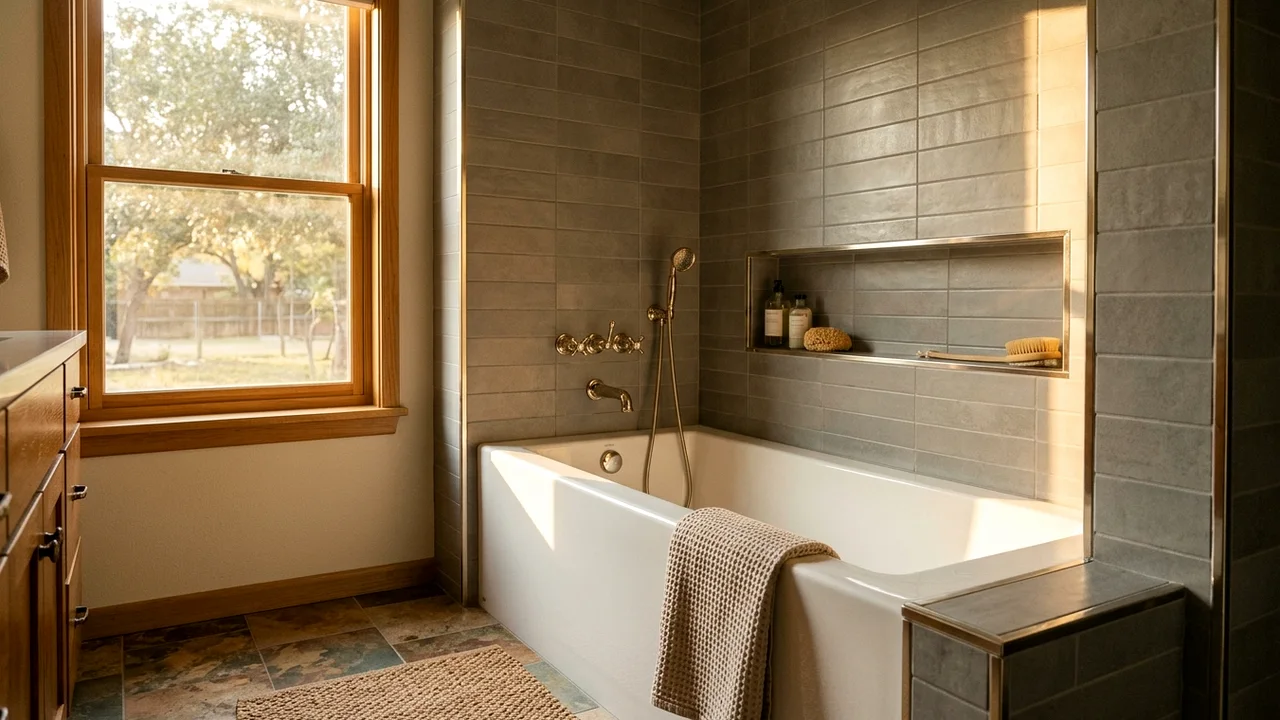
Keep the Tile or Redo the Whole Surround?
If the wall tile is sound and you still like it, a tub-only swap keeps costs down. We’ll try to salvage spare tile from a closet or attic, or choose an accent band in a complementary color that runs around the alcove.
If the tile is cracked, loose, or hollow sounding when tapped, it’s often not worth saving. Once the whole surround comes out, we can add a niche, change the valve, and put proper waterproofing behind new tile. For homes where the tub hardly gets used, it may make more sense to look at turning the tub into a shower instead.
Getting a Heavy Tub Into an Older San Antonio Home
Hallways in 1950s and 1960s ranch homes can be narrow, and bathroom doors are often only 24 to 28 inches wide. A one-piece tub has to clear every turn on the way in, and the old tub has to come out the same path. We measure that route at the walkthrough, not on install day.
Sometimes the answer is to pull the door casing or remove the old tub in pieces. With cast iron, we break the old one in place under a heavy blanket. None of it is difficult, but it’s planned ahead so the day goes smoothly. Talk it through with us by phone and we’ll set up a measure.
Projects that often go with bathtub replacement
Bathtub Refinishing
If your tub is structurally sound but dull, stained, chipped or an outdated color, refinishing can give it a new surface without demolition. It’s quicker and cheaper than replacement, as long as the tub underneath is worth saving.
Freestanding Tub Installation
A freestanding tub turns a primary bath into a room you want to linger in. Getting one right is mostly about the parts you never see: drain placement, floor strength, the filler, and enough clearance to clean around it.
Tub-to-Shower Conversion
Climbing over a tub wall gets old, and plenty of 60-inch alcove tubs see more showers than baths anyway. We convert that space into a step-in shower that fits the same footprint and works with the drain already in your slab.
Bathroom Tile Installation
Good tile work is mostly preparation. Flat walls, a proper waterproof layer, and movement joints where the slab will shift decide whether a bathroom floor or shower stays crack free. We spend our time there, then set the tile carefully.
Bathtub Replacement questions
Can you replace a bathtub without removing all the wall tile?
In most alcoves, yes. We remove the lowest one or two courses of tile and the backer behind them, swap the tub, and rebuild that band. If matching tile isn’t available, we choose an accent row that runs around the whole alcove so the change looks deliberate. The rest of the surround stays in place.
How long does a bathtub replacement take in San Antonio?
A straight swap with a tile band repair usually takes 3 to 4 working days, mostly because mortar and grout need time to cure. Adding a new valve or full wall tile stretches it to 5 or 6 days. You’ll want a second bath available, or we can plan around a few days at a time.
Is a cast iron replacement tub worth the extra cost?
If you take baths often, many people think so. Cast iron holds heat well, feels solid underfoot, and the enamel lasts for decades with gentle cleaning. The tradeoff is weight: some upstairs floors need added support, and installation takes more people. Acrylic is the lighter choice when soaking isn’t a priority.
What does a leaking tub drain do to a slab home?
Water from a slow drain leak usually settles into the soil box under the tub. You may notice a musty smell, damp baseboards in the next room, or flooring that lifts near the bath. Left alone, it can soften framing and invite mold. Replacing the tub lets us fix the drain properly and dry the area out.
Should I replace the tub valve during a bathtub replacement?
If the valve is more than about twenty years old, or the handle drips and drifts in temperature, it’s worth doing while the wall is partly open. Hard water wears cartridges quickly here. A new pressure-balanced valve adds a modest amount to the job and saves opening that tile again later for a separate repair.