Is It Really the Pan? Ruling Out the Other Leaks
Not every wet spot near a shower is a pan failure. Before tearing anything out, we test. A leak at the valve shows up when the water runs but not when the shower simply sits full. Bad grout or caulk at the door lets water sneak out only when someone is splashing. A failed pan, by contrast, leaks whenever water sits on the shower floor.
Our simplest test is to plug the drain and fill the shower floor with an inch or two of water, mark the level, and leave it for several hours. If the level drops or moisture appears outside the shower, the pan is the problem. If it holds, we look at the valve, the showerhead arm, and the door seals instead. For leaks that turn out not to be the pan, our leaking shower repair page covers those fixes.
- Damp or swollen baseboards next to the shower
- Floor tile outside the shower that sounds hollow or lifts
- Grout on the shower floor that stays dark long after use
- A musty smell that comes back after cleaning
- Stains or bubbling paint on a ceiling below
Why Shower Pans Fail in Homes Around San Antonio
Older tiled showers usually have a vinyl or lead liner under a mortar bed. Over decades, that liner can crack at the corners, get punctured by a nail driven too low on the wall, or pull away from the drain clamp. Water then gets past it and wicks into the slab, the bottom plate of the wall, or the subfloor.
Slab movement plays a part here too. Expansive clay soils make foundations shift slightly, and a rigid mortar bed can crack along with the slab. We also see many 1970s and 1980s builder showers where the liner was never turned up high enough on the walls or over the curb, so water found a path from day one and only took years to show.
What Happens Under a Leaking Shower
Water that escapes a shower pan doesn’t evaporate quickly. In a slab home, it soaks into the bottom wood plate of the walls, the drywall, and the carpet pad or flooring in the next room. In a second-floor bath, it goes straight into the subfloor and ceiling below. Warm, humid months make it worse because the moisture never dries out between showers.
When we open the shower, we expect to find some of this. We remove wet drywall and insulation, probe the framing for soft wood, and cut out anything that won’t hold a nail. If mold is present, it gets cleaned and the area is dried before rebuilding. Larger water damage to floors, cabinets or the room next door is handled through our water damage repair service.
Our Shower Pan Replacement Process
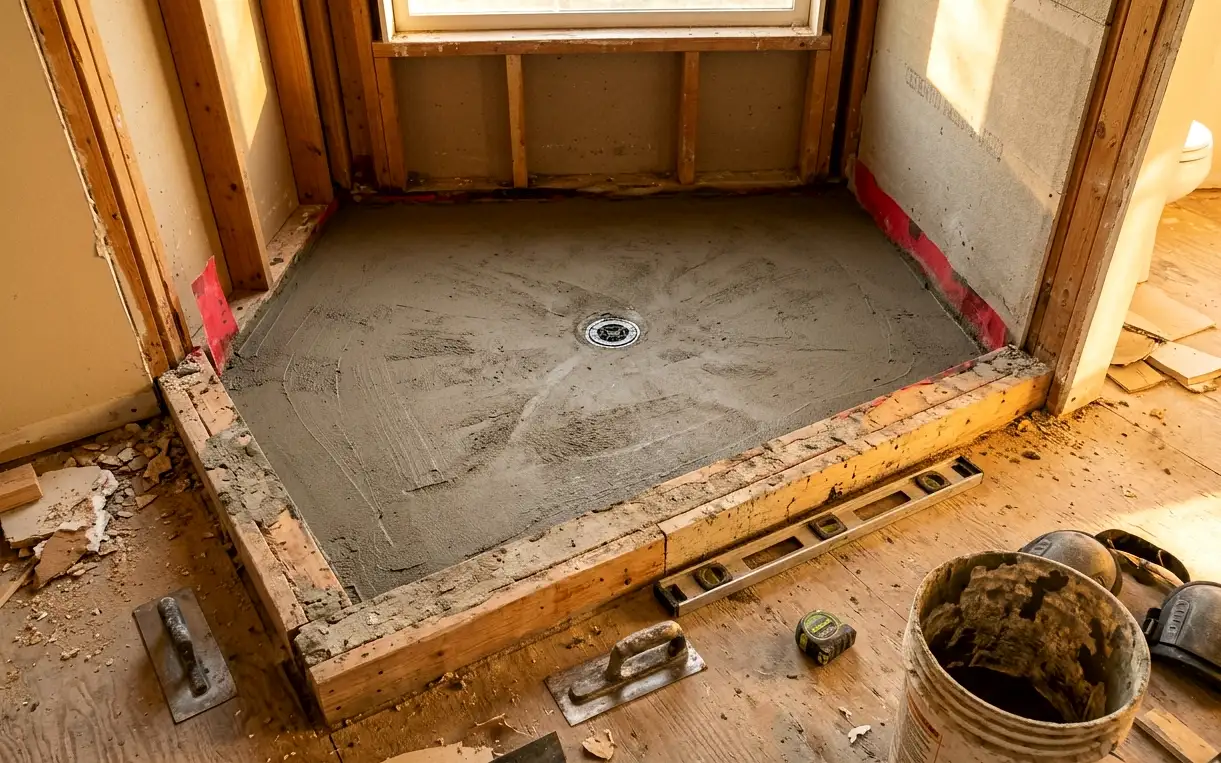
Pan replacement means removing the shower floor and the bottom part of the walls, because the liner turns up behind the wall tile. Here’s how we do it.
- Confirm the leak source with a flood test and moisture readings
- Remove the curb, floor tile and mortar bed, plus the lowest courses of wall tile
- Pull the old liner and inspect the drain, framing and subfloor
- Replace rotted wood, treat any mold and dry the area fully
- Install a new drain body and either a sloped mortar bed with a liner or a sheet membrane system
- Flood test the new pan for at least a full day before tile
- Set floor tile, rebuild the curb, patch wall tile and finish with grout and sealant
Keep the Walls or Replace the Whole Shower?
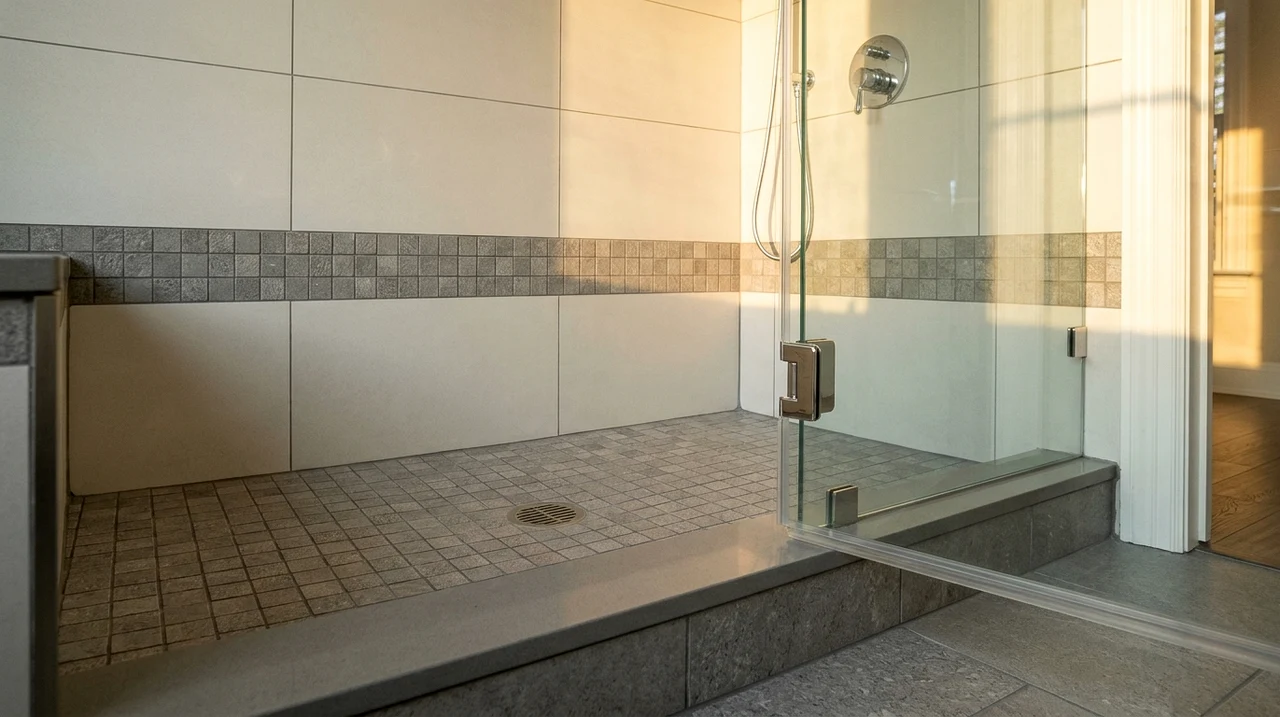
If the wall tile is in good shape and the leak is only in the pan, we can save the walls by cutting out the bottom few rows of tile, which lets us lap the new waterproofing properly. Matching that tile is the tricky part. We check closets and garages for leftover boxes, and if there are none, we design an accent band that looks intentional.
When the walls are on old drywall or greenboard, show loose tiles, or have also been leaking, a full rebuild is usually the better value. At that point you’re paying for most of the labor anyway, and you get waterproofing from floor to ceiling. That project is covered on our shower replacement page.
What a New Pan Should Do Differently
A replacement should fix what the original got wrong. We slope the floor properly toward the drain so water doesn’t puddle in the corners. The liner or membrane turns up the walls and over the curb, with sealed corners. The drain is clamped or sealed to the membrane according to the manufacturer’s method. Then we test before any tile covers it.
Modern sheet and liquid membranes go on top of the mortar bed instead of underneath, so the tile and grout stay drier and stain less with hard water. Give us a ring if you see signs of a leak; the sooner a failed pan is replaced, the less framing and drywall it takes with it.
Projects that often go with shower pan replacement
Leaking Shower Repair
A shower leak rarely shows up where it starts. Water runs along studs, under tile, and across the slab before it stains a baseboard or a ceiling, so the first job is finding the true source before anything gets torn out.
Shower Replacement
Swap a cracked insert, a tired tile stall, or a leaky old valve for a new shower in the same footprint. We open the wall, fix what’s hiding behind it, and rebuild with materials that handle hard water.
Kitchen and Bath Water Damage Repair
Water from a failed supply line or a slow drain leak can sit inside a cabinet base or behind a tub for months before anyone notices. We find the source, dry what got wet, and rebuild the finishes so the room is whole again.
Bathroom Tile Installation
Good tile work is mostly preparation. Flat walls, a proper waterproof layer, and movement joints where the slab will shift decide whether a bathroom floor or shower stays crack free. We spend our time there, then set the tile carefully.
Shower Pan Replacement questions
How do I know my shower pan needs replacement and not just new grout?
Do a simple test. Plug the drain, fill the shower floor with about an inch of water, mark the level, and wait several hours. If the level drops or water appears outside the shower, the pan is leaking. Regrouting alone won’t fix that, because the waterproof layer under the tile has failed.
Can a shower pan be replaced without removing the wall tile?
Usually only the bottom courses of wall tile need to come out. The pan liner turns up the walls several inches, so we remove that strip to install and lap the new waterproofing correctly. The upper walls can stay if they’re sound. Matching tile for that band is the main challenge.
Is a leaking shower pan an emergency in a San Antonio slab home?
It’s not usually dangerous, but it shouldn’t wait. Water escaping a pan soaks the wall framing and flooring next to the shower, and our humid weather keeps it from drying. Stop using the shower and call. We answer around the clock and can set up an inspection to confirm the source.
How long does shower pan replacement take?
Most take 4 to 7 working days. Demolition and inspection take about a day, then drying and framing repairs. A mortar bed needs to cure, and the new pan sits through a flood test before tile goes down. Wall tile repairs and grouting finish the job.
Will my homeowner’s insurance cover a failed shower pan?
That depends on your policy. Many policies treat long-term leaks differently from sudden water damage, and the pan itself is often excluded. We can document what we find with photos and notes for your adjuster, but you’ll want to check coverage directly with your insurer before work begins.