Where Grab Bars Actually Prevent Falls
Most bathroom falls happen at transitions: stepping over a tub wall, turning in the shower, lowering onto or rising from the toilet. Those are the spots we focus on first. A towel bar or a soap dish gets grabbed in a slip, but neither is built to hold a person, and they tear out of the wall when it counts.
We start every job by asking who uses the bathroom and how. Someone recovering from knee surgery needs different support than a parent with balance problems or a wheelchair user. Height, reach, and dominant hand all change where a bar should go, so we’d rather spend a few minutes watching how you move in the room than follow a standard drawing.
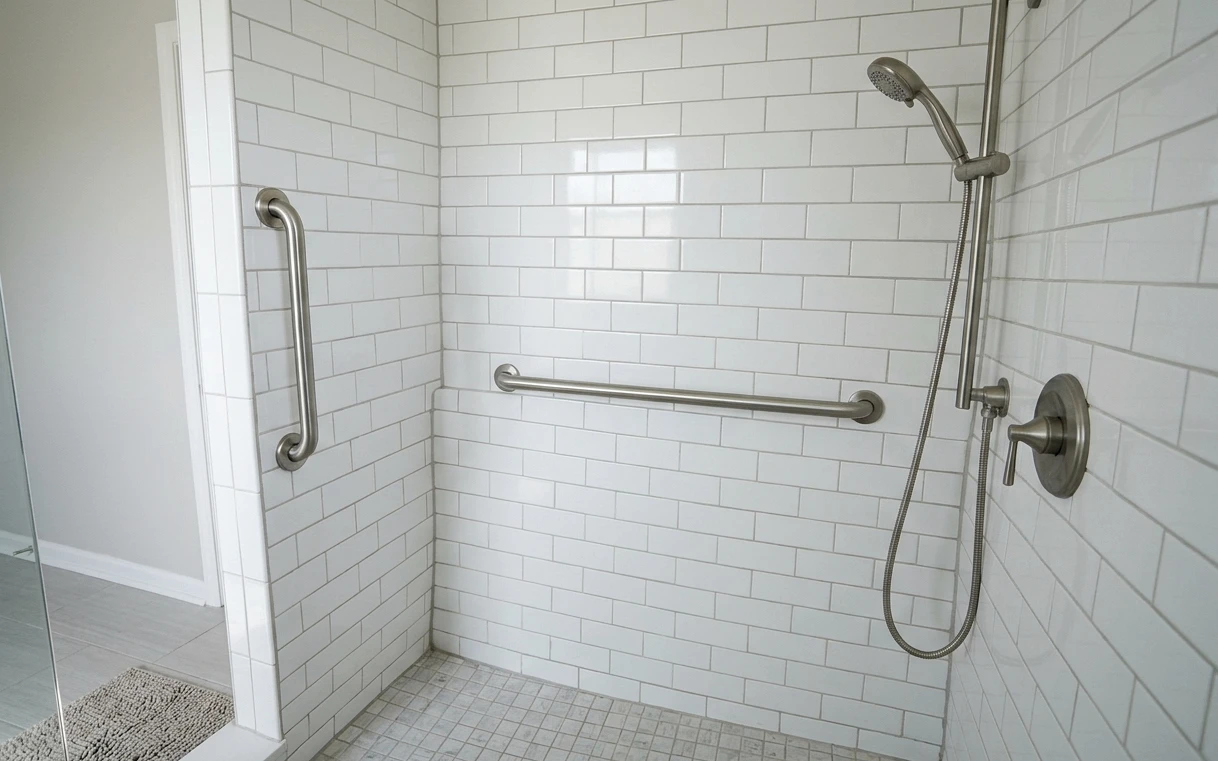
- Shower entry: a vertical bar beside the opening for stepping in and out
- Inside the shower: a horizontal bar on the long wall for turning and standing
- Tub: a bar on the back wall and one at the faucet end, plus one for stepping over the side
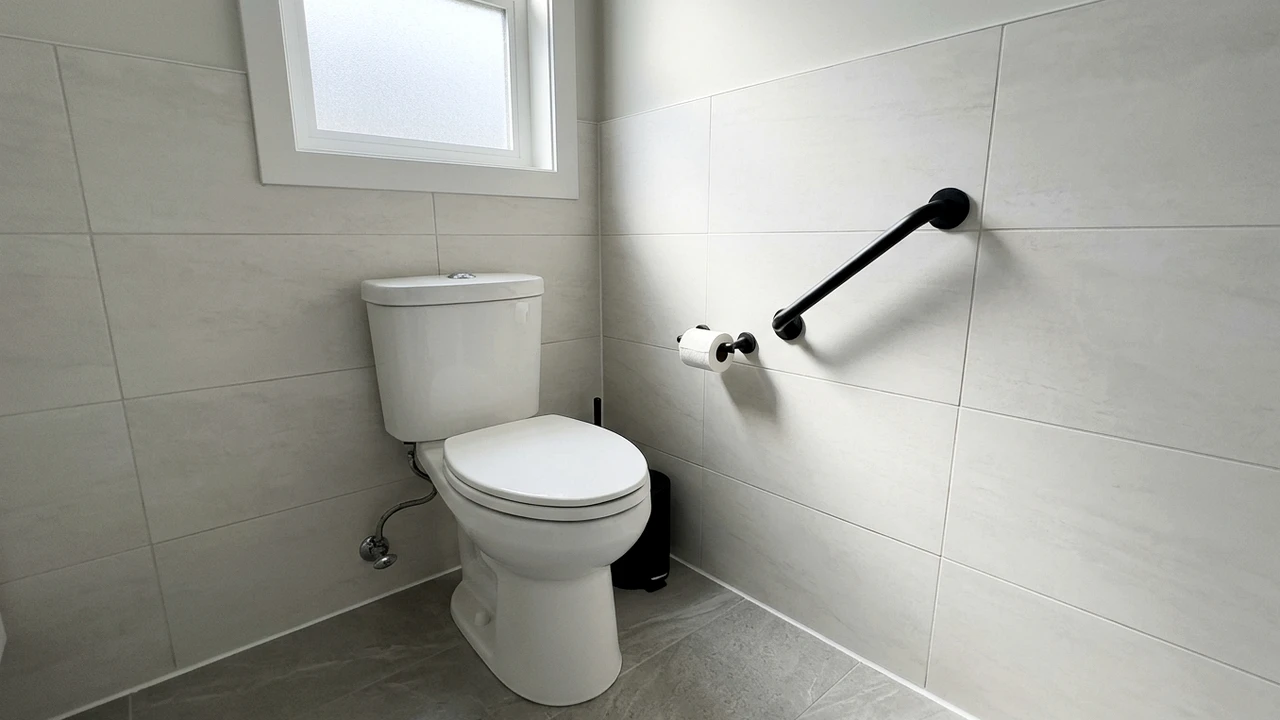
- Toilet: a bar on the side wall, and sometimes a fold-down bar where no wall is close
- Shower bench area: a bar within reach while seated
What Holds a Grab Bar to the Wall
Studs are the first choice. A bar screwed into framing with the right fasteners will hold far more than any person puts on it. The trouble is that studs rarely land exactly where a bar should go, especially in fiberglass tub surrounds and older homes with irregular spacing.
Where there’s no stud, we have a few options. Specialty wall anchors made for grab bars can work in drywall or tile over cement board when installed to the maker’s instructions. In a remodel or a wall that’s already open, we add solid wood blocking between studs so bars can go anywhere along that wall later. That’s a cheap step during construction and worth asking for in any new walk-in shower, even if no bars are needed yet.
Drilling Through Tile Without Cracking It
Porcelain and glazed ceramic tile crack if they’re drilled carelessly. We locate framing first, mark carefully, use diamond or carbide bits at low speed with water, and set each hole away from tile edges where possible. Every hole is sealed with silicone before the flange goes on so shower water can’t get into the wall behind it.
Fiberglass and acrylic tub surrounds need extra care. They flex, and the space behind them is often hollow. We confirm what’s behind the panel before drilling and use anchors rated for that setup, or recommend adding blocking from the back if the wall can be opened.
How a Grab Bar Visit Goes
Most installs fit into a single visit. Here’s the order.
- Talk it through: who uses the bathroom, which moves are hardest, and any medical guidance you’ve been given
- Mark placement: bar positions and heights are marked with you in the room
- Find framing: studs and blocking are located, and wall type behind tile or panels is confirmed
- Drill and seal: holes are drilled carefully, then sealed against water
- Mount: bars are fastened into studs, blocking, or rated anchors
- Load test: each bar is pulled and pushed firmly before we leave
Bars That Don’t Make the Room Look Clinical
Grab bars have come a long way. They’re made in brushed nickel, matte black, and bronze to match faucets, and some double as towel bars or toilet paper holders while still carrying full weight. Textured or knurled finishes give a better grip with wet hands, which matters more than the look.
Color contrast also helps people with low vision. A dark bar against light tile is easier to find quickly. We’ll bring options in finishes that match your bathroom hardware, so the bars look intentional rather than added on.
Bars that double as towel bars are handy in small rooms where wall space is tight, but make sure the product is rated as a grab bar, not just styled like one. Decorative towel bars that look similar are not built to carry body weight, and we’ll point out the difference when you’re choosing.
When a Few Bars Aren’t Enough
Sometimes grab bars are the first step of a bigger plan. If stepping over a tub wall is the real danger, a tub-to-shower conversion removes the hazard altogether. A curbless entry, a built-in bench, a handheld shower on a slide bar, and a comfort-height toilet all work together in an accessible bathroom remodel.
Our aging-in-place bathroom checklist walks through what to plan now versus later. For a few bars installed right, or to talk through a larger change, give us a ring.
Projects that often go with grab bar installation
Accessible Bathroom Remodel
An accessible bathroom is one you can still use comfortably when your knees, balance or eyesight change. We plan for the way you live now and the way you may want to live later, without making the room look clinical.
Walk-In Shower Installation
A walk-in shower looks simple: tile, a drain and a sheet of glass. The part that decides whether it lasts is underneath, in the slope, the pan and the membrane, and that’s where we spend the most care.
Tub-to-Shower Conversion
Climbing over a tub wall gets old, and plenty of 60-inch alcove tubs see more showers than baths anyway. We convert that space into a step-in shower that fits the same footprint and works with the drain already in your slab.
Toilet Replacement
A toilet that rocks, runs all night, or leaves a stain at its base is telling you something about the seal and the floor below. We swap the fixture and fix what’s underneath so the new one stays put.
Grab Bar Installation questions
What height should grab bars be installed at in a San Antonio bathroom?
Common guidance puts horizontal bars about 33 to 36 inches above the floor, but the right height depends on the person using it. Someone tall, someone using a wheelchair, and someone who mostly needs help stepping into the tub may each need different placement. We mark positions with you in the room so the bars fit how you actually move.
Can grab bars be installed in a fiberglass tub surround?
Yes, with care. Fiberglass and acrylic surrounds often have hollow space behind them, so a bar can’t rely on the panel alone. We check what’s behind the wall, then use framing where it lines up or anchors designed for that kind of wall. If neither will hold properly, we’ll recommend adding blocking from behind the wall.
Are suction cup grab bars safe to use in the shower?
We don’t recommend them for support. Suction bars can lose grip without warning, especially on textured tile or after temperature changes, and they aren’t built to hold a falling adult. They’re fine as a balance aid for reaching, but anyone who needs a bar to carry their weight should have one fastened into framing or blocking.
How many grab bars does a typical bathroom need?
Many bathrooms do well with two or three: one beside the toilet, one at the shower or tub entry, and one inside the wet area. Someone with limited mobility may need more, including a fold-down bar near the toilet or one beside a shower bench. We base the count on the person using the room, not a fixed number.
Can grab bars go into a newly tiled shower without damaging the waterproofing?
Yes, if the holes are drilled and sealed correctly. Each hole goes through tile and backer board, then gets filled with silicone before the bar’s flange and screws go in, so water can’t follow the fastener into the wall. On a new shower, the cleanest approach is planning blocking before tile goes up, so bar locations are set and no guesswork is needed.