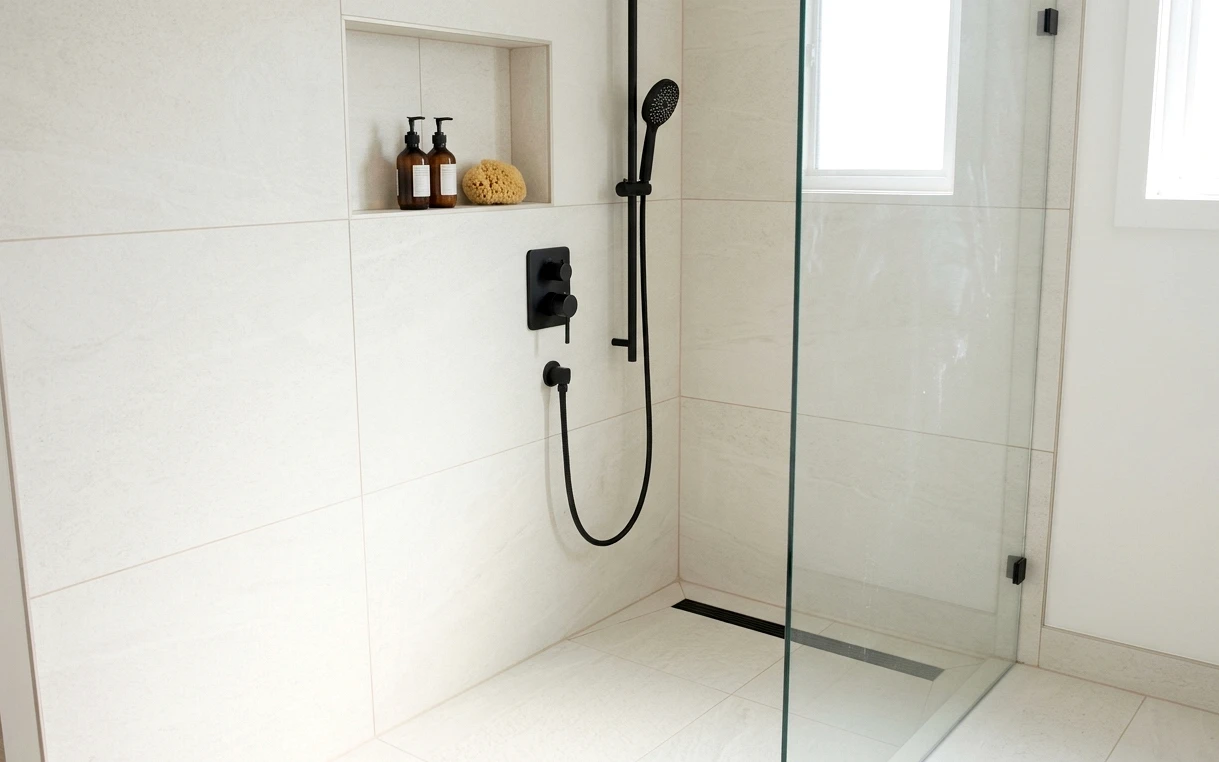
What Changes When You Replace the Shower Instead of Patching It
A patch hides the symptom. Regrouting, caulking a crack in a fiberglass floor, or swapping a showerhead buys a little time, but none of it touches the valve inside the wall or the waterproofing behind the tile. Replacement does.
Once the old surround comes out, we can see the framing, the drain connection, and the condition of the backer board. In many 1980s and 1990s builder baths around the city, that backer is plain drywall or greenboard that has been soaking up water for decades. We cut that out and start the new shower on a clean, flat, waterproof base.
Tile, Solid Panels, or a Molded Insert: Which Fits Your Bath?
There isn’t one right answer. Tile gives you the most design freedom and lets us build niches and benches anywhere, but it costs more in labor and asks for grout care. Solid surface or cultured stone panels go up faster, have few or no grout lines, and shrug off soap film. A one-piece insert is the budget route, though it has to fit through the doorway, which rules it out in a lot of older homes.
We’ll lay out samples during the walkthrough and talk through how each one behaves with San Antonio’s mineral-heavy water. Our tile selection guide goes deeper on porcelain sizes, slip resistance, and grout colors that hide scale.
- Large-format porcelain: fewer grout joints, easy to wipe down
- Solid surface panels: quick install, very little maintenance
- Natural stone: beautiful, but needs sealing and gentle cleaners
- Acrylic insert: lowest cost, limited sizes and styles
How a Shower Replacement Runs From Demo Day to First Use
Most of the wait happens before demolition, while tile, glass and fixtures are ordered. Once we start, the work moves in a set order so nothing gets buried before it’s checked.
- Protect floors and the path to the bath, then remove the old surround and pan
- Inspect framing and drain, and repair any soft or rotted wood
- Install the new mixing valve and set the showerhead height you want
- Hang cement board or foam board and apply a continuous waterproof membrane
- Flood test the pan before any tile goes down
- Set tile or panels, grout, seal, and install trim
- Measure and install glass after the tile is finished
Why the Valve Behind the Wall Matters More Than the Trim
The handle you see is just the front. Behind it sits the valve body, and older single-handle valves in a lot of local homes have cartridges worn down by hard water scale. That’s why the temperature drifts or the handle gets stiff. When the wall is already open, replacing the valve costs far less than it ever will again.
We install pressure-balanced or thermostatic valves so a flushing toilet doesn’t scald whoever is in the shower. If you want a handheld wand, a second outlet, or body sprays, this is the moment to plan the plumbing for it.
Showerhead height is another easy win while the wall is open. Builder baths often set it around chest height for a tall adult, which leaves everyone else ducking or stretching. We can raise the arm, add a rain head on a ceiling arm, or set a second head lower for a shorter family member. Volume controls and diverters are planned now too, so the trim plate you pick actually matches the valve body behind it and no second hole has to be cut later.
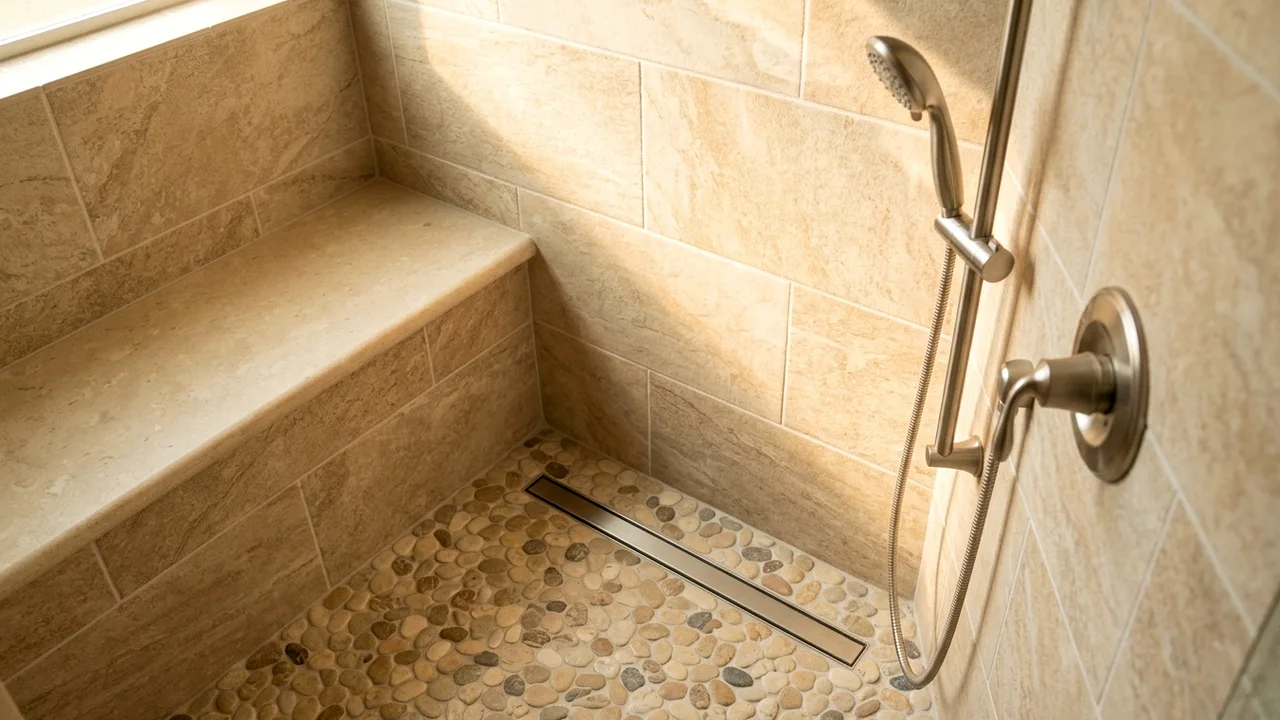
Problems We Often Find Behind Old Showers in San Antonio
Expect a few surprises. We price the likely ones up front and call you before doing any extra work, so there’s no mystery on the final bill.
- Black staining or soft studs at the base of the valve wall
- A cracked or patched fiberglass pan with water under it
- Drain lines in the slab that were never tied in cleanly
- Missing or failed vapor barrier behind the tile
- Galvanized supply lines that should be replaced while open
Small Upgrades That Make a New Shower Easier to Live With
A recessed niche ends the clutter of bottles on the floor. A fold-down or built-in bench helps with shaving legs and later in life. A slide bar for the handheld makes cleaning and rinsing kids or pets much easier. Blocking for a future grab bar costs almost nothing during framing.
If you’re still deciding whether to keep the tub or turn it into a larger shower, our page on converting a tub into a shower covers that choice. For a full remodel around the new shower, see our bathroom remodeling work. Either way, give us a ring and a designer will set up a time to measure.
Projects that often go with shower replacement
Walk-In Shower Installation
A walk-in shower looks simple: tile, a drain and a sheet of glass. The part that decides whether it lasts is underneath, in the slope, the pan and the membrane, and that’s where we spend the most care.
Shower Pan Replacement
Wet baseboards outside the shower, loose floor tile, a musty smell, or a dark stain on the ceiling below usually trace back to one thing: a shower pan that has stopped holding water. Calls are answered 24/7, so you can reach us the moment you spot it.
Frameless Glass Shower Doors
Heavy, clear glass with minimal hardware makes a shower look larger and lets the tile show. In a city with water this hard, though, the glass you pick and how you care for it matter as much as how it looks on day one.
Bathroom Tile Installation
Good tile work is mostly preparation. Flat walls, a proper waterproof layer, and movement joints where the slab will shift decide whether a bathroom floor or shower stays crack free. We spend our time there, then set the tile carefully.
Shower Replacement questions
How long does a shower replacement in San Antonio usually take?
Once materials are on hand, plan on 7 to 12 working days. Demolition and repairs take a day or two, waterproofing and the flood test another two, and tile is the longest stretch. Frameless glass is measured after tile and usually goes in about a week later, so you may use the shower with a temporary curtain for a few days.
Can you replace a shower without touching the bathroom floor?
Usually, yes. We cut the floor tile cleanly at the shower edge and protect the rest of the room. If the existing floor tile is discontinued, the threshold or curb becomes the transition, and we’ll show you options that look intentional. Floors only need to come up if water damage has spread beyond the shower footprint.
Is a shower replacement worth it in a 1980s tract home?
It’s one of the most useful upgrades in those homes. Original fiberglass stalls tend to crack and yellow, and the valves behind them are often worn from hard water. Replacing the shower fixes the part of the bath you use every day, and it fits a moderate budget without redoing the whole room.
Will a new shower handle San Antonio’s hard water better than my old one?
Material choice helps a lot. Large porcelain tiles, solid panels, and a sealed, lighter grout show less scale and wipe clean faster. Pairing that with a water softener or a quick squeegee after each shower keeps glass and fixtures looking new far longer than the original builder materials ever did.
Do I need a permit for a shower replacement?
Replacing a valve or changing plumbing generally calls for a plumbing permit through the city where you live. A simple cosmetic swap may not. We sort out what applies to your address during planning and handle the paperwork as part of the job.
Can a shower replacement go in while we keep using another bathroom?
Yes, and most families do exactly that. We seal off the work area with plastic and keep a clear path from the door to the bath, so dust stays contained. Water to the rest of the house is shut off only for short windows while the new valve is tied in, and we tell you the day before so nobody is caught mid-shower.