Why Granite Still Makes Sense in a Hot Kitchen
Granite formed under heat and pressure, so a warm pan won’t hurt it the way it can hurt resin-based surfaces. That’s a real advantage in kitchens where people cook a lot and set things down quickly. It also handles sun near windows without fading, and it works well on covered patios and outdoor kitchens where engineered quartz struggles.
Granite is porous to some degree, though how porous depends on the stone. Dense dark granites barely absorb anything. Lighter, more open stones can soak up oil or wine if spills sit. A penetrating sealer slows that absorption, and we test each slab so you know what you’re working with before it reaches your kitchen.
- Tolerates hot cookware far better than quartz, though trivets still protect it over time.
- Holds its color in strong sunlight and on covered outdoor counters.
- Every slab is unique, so the pattern can’t be copied in the next house over.
- Can be repaired and polished if a chip or dull spot appears.
Walking the Stone Yard Without Getting Overwhelmed
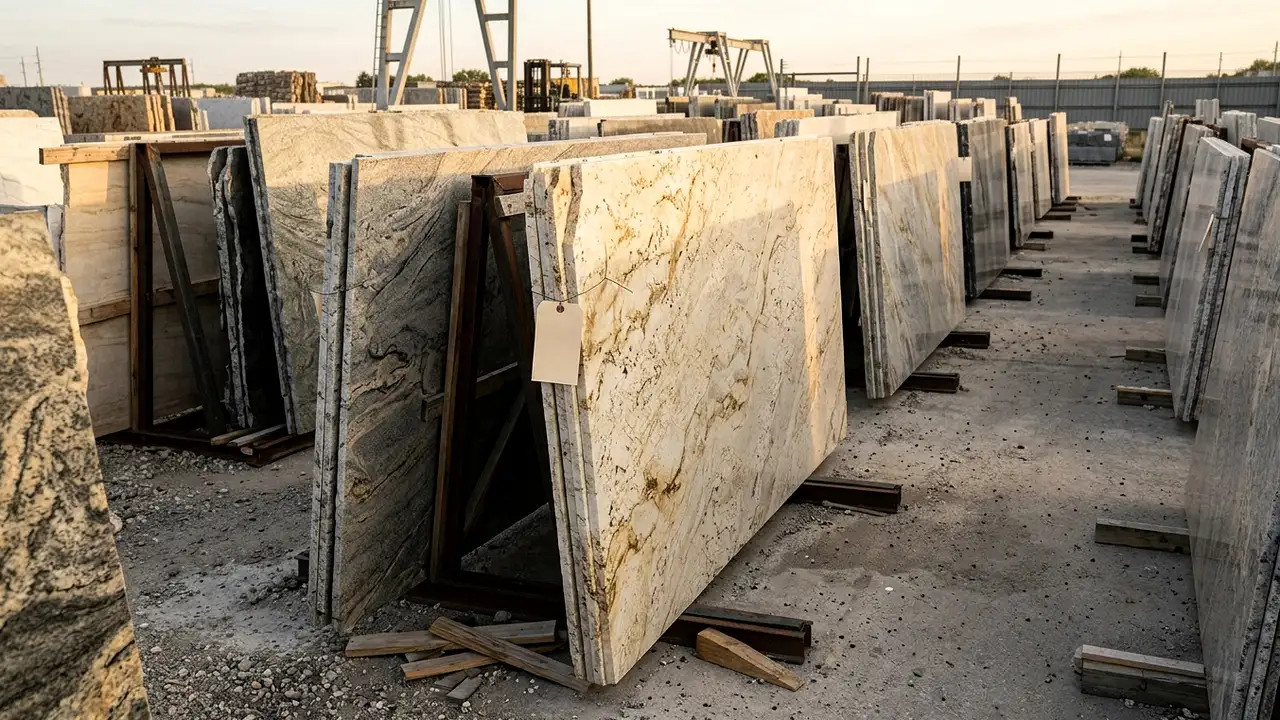
Picking granite is different from choosing from a sample book. You walk rows of full slabs, and the light, the vein flow and small surprises like quartz pockets or fissures only show at full size. We suggest bringing a cabinet door, a floor tile and a photo of your kitchen, because a slab that looks warm in the yard can read very differently next to white cabinets.
Once you find a slab you love, we tag it so it’s held for your job. If the counters need more than one slab, the slabs should come from the same lot so the color and pattern match. With strongly veined stones, we lay out templates on the slabs to show which part of the pattern lands on the island and which lands by the range.
Granite Colors That Suit San Antonio Homes
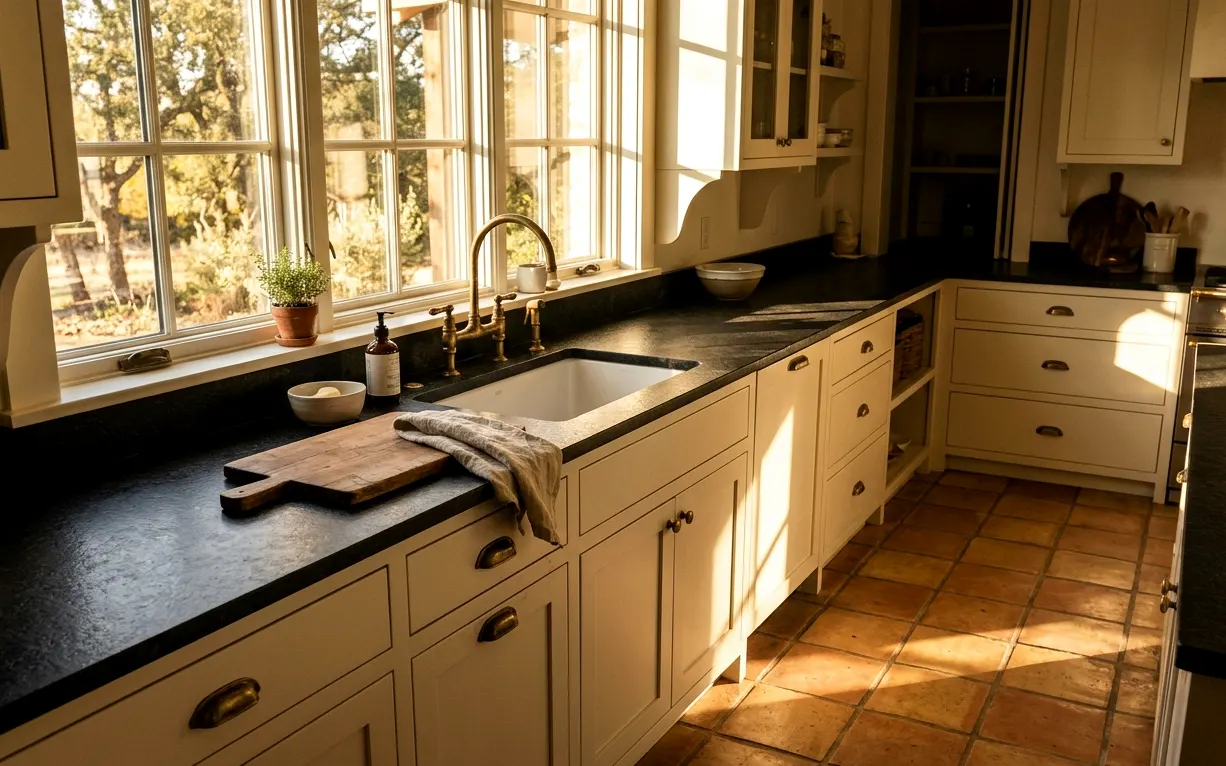
Many homes built in the 1990s and 2000s across Stone Oak, Encino Park and the northern suburbs came with speckled tan or brown granite. A lot of those owners now want a lighter or calmer look. Creamy whites with soft gray movement, deep blacks with a leathered finish, and quiet gray granites all pair well with painted cabinets and lighter floors.
In Hill Country homes with limestone fireplaces and exposed beams, warmer stones with gold and taupe tones often fit better than stark whites. Finish matters as much as color. Polished granite is the easiest to clean. Honed and leathered finishes look softer and hide fingerprints, but they can show oil spots more easily and need sealing a bit more often.
How a Granite Countertop Job Runs
The steps are similar to any stone counter, with slab selection added up front. Here’s what to expect from start to finish.
- Slab selection: you pick and tag slabs at the yard, with a designer helping you check for flaws.
- Cabinet prep: base cabinets are leveled and reinforced where heavy overhangs are planned.
- Template: once cabinets are fixed, the fabricator takes exact measurements.
- Layout review: you see how each piece is cut from the slab and where seams fall.
- Fabrication and sealing: the stone is cut, edged, polished and sealed at the shop.
- Install and hookup: counters are set, seams are joined, and the sink and faucet are reconnected.
Replacing Old Granite or Tile Counters
Tearing out old counters is often where surprises show up. Tile counters from older San Antonio homes sometimes sit on a thick mortar bed, which is heavy and messy to remove. Old granite may be glued to plywood that has water damage near the sink. We plan for both and check the cabinet tops before the new stone is templated.
If the cabinets below are dated but sound, new granite pairs well with freshly painted cabinets for a big change at a moderate cost. If you’re also weighing engineered stone, our quartz countertop page explains how the two compare in daily use.
Sealing and Everyday Care for Granite
A simple water test tells you when it’s time to reseal. Drip a little water on the counter and wait 15 minutes. If it darkens the stone, the sealer has worn and it’s time to reapply. Many granites need resealing every year or two, while very dense stones may go much longer.
Clean with warm water and a pH-neutral stone cleaner. Vinegar and harsh citrus cleaners can break down the sealer over time, which is worth knowing in a city where people reach for vinegar to fight hard water spots. For mineral film around the faucet, use a cleaner made for stone instead. To compare stone types in more depth, read our quartz versus granite guide, or call us to talk through your kitchen.
Projects that often go with granite countertops
Quartz Countertops
Quartz gives you a consistent, low-maintenance surface that shrugs off coffee, wine and hard water spots. We plan the slab layout, seams and edges with you, then template and install once the cabinets are set and level.
Kitchen Remodeling
A good kitchen remodel starts with the house, not a catalog photo. We design and build full kitchen remodels across San Antonio, sorting out layout, plumbing, power and permits before anyone picks a cabinet color.
Outdoor Kitchen Construction
An outdoor kitchen here has to survive months of triple-digit afternoons, sudden downpours and a sun that bleaches anything left uncovered. We build them with shade, heat-tolerant materials and properly run utilities from the first sketch.
Kitchen Backsplash Installation
A backsplash is small in square footage and huge in how a kitchen looks. We plan the layout, center the pattern on what your eye sees first, and finish every edge so nothing looks like an afterthought.
Granite Countertops questions
How often do granite countertops need sealing in San Antonio homes?
It depends on the stone. Lighter, more porous granites often need resealing every year or two, while dense dark stones may go several years. Do the water test: if a few drops darken the stone within 15 minutes, it’s time. Resealing is a simple wipe-on job most homeowners can do themselves.
Is granite a good choice for an outdoor kitchen in South Texas?
Yes, it’s one of the best. Granite doesn’t fade in sunlight and handles heat well, which most engineered quartz can’t. Choose a darker or denser stone that resists staining, seal it well, and expect it to get hot to the touch in direct sun. Our outdoor kitchen work often uses granite.
Can granite countertops crack on a moving slab foundation?
It’s rare, but stone doesn’t flex. If a slab foundation shifts enough to rack the cabinets, the counter can crack at its weakest point, usually near a sink cutout. Leveling cabinets carefully and supporting overhangs properly reduces the risk. If you see new cracks in tile or drywall nearby, mention it at the walkthrough.
What’s the difference between polished and leathered granite countertops?
Polished granite has a glossy, reflective face that shows the color deeply and cleans easily. Leathered granite is brushed to a soft texture that hides fingerprints and water spots, which helps with hard water. It can hold oil a bit more, so it benefits from regular sealing.
Can I keep my granite and only change the backsplash and sink?
Often, yes. If the granite is in good shape and you like it, we can swap the sink, add a new faucet and install a fresh backsplash around it. Undermount sinks can be replaced carefully from below. We’ll check the stone around the old sink for cracks before starting.